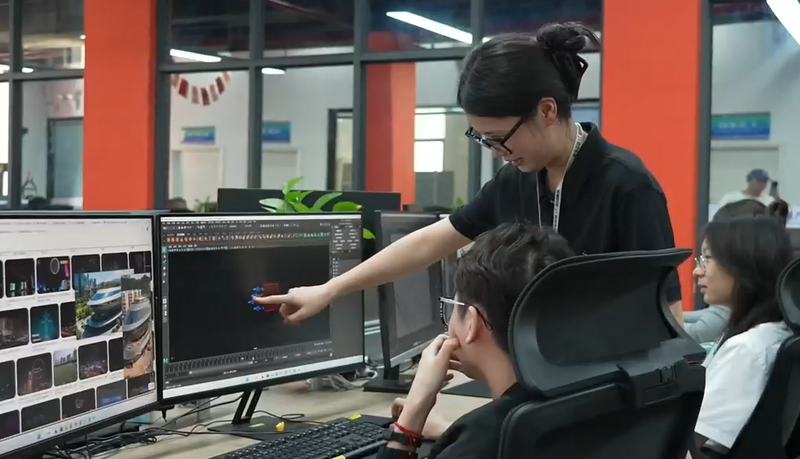
At a recent concert in Nanning, the night sky was transformed into a digital canvas as 1,000 drones rose in unison, forming iconic symbols of the Guangxi Zhuang Autonomous Region. While the crowd marveled at the spectacle, 22-year-old Yang Dan saw the intricate dance of code, timing, and precision. As a drone swarm flight planner, Yang is responsible for writing flight scripts and planning routes, having already completed more than 150 performances.
Yang's career represents a broader shift in the labor market of the Chinese mainland. Her profession was recently added to a new occupational classification system. Since the rollout of this system in 2019, seven batches have been unveiled, introducing a total of 110 new occupations. This initiative provides young professionals with clearer career paths in emerging industries, bridging the gap between academic study and the rapidly evolving demands of the modern economy.
Pioneering the Future of Robotics
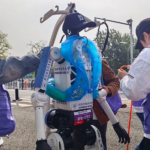
The drive for industrial upgrading is equally evident in Chengdu, Sichuan Province. Here, a research team with an average age of under 30 has developed a second-generation wheeled humanoid robot. This advanced machine is not merely a display piece; it is designed as a practical tool for factories and businesses to reduce repetitive labor and enhance efficiency. The robot is capable of performing precise industrial tasks, participating in robot manufacturing, and even executing Wing Chun movements.
The team's success is rooted in a specialized division of labor. Pang Kai, 32, leads the lab with a focus on solving real-world industrial challenges. He is supported by algorithm engineer Li Lanxin, born in 1999, who develops motion control systems for safe human-machine interaction, and Ding Yuxuan, a researcher born after 2000, who specializes in visual-language-action models to improve the robot's perception and decision-making capabilities.
Digital Innovation in Rural Landscapes
Beyond the high-tech industrial parks, youth-led innovation is revitalizing rural areas. In Hainan, Jiang Bizhen, a representative of the post-1985 generation, has spent a decade as an agricultural live-stream host. By leveraging digital platforms, Jiang has helped more than 3,000 farming households sell local products online and created over 300 local jobs, ensuring villagers can secure stable incomes within their own communities.
The impact of this digital transition is amplified by the opportunities provided by the Hainan Free Trade Port. Local tropical fruits, coffee, and specialty foods are now reaching international markets in Russia, Thailand, and the United Arab Emirates, showcasing how the integration of youth entrepreneurship and strategic trade policy is opening the Chinese mainland's rural economy to the world.
Reference(s):
Young dreamers, new engines: How China's youth are shaping the future
cgtn.com