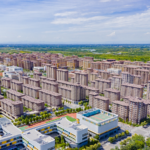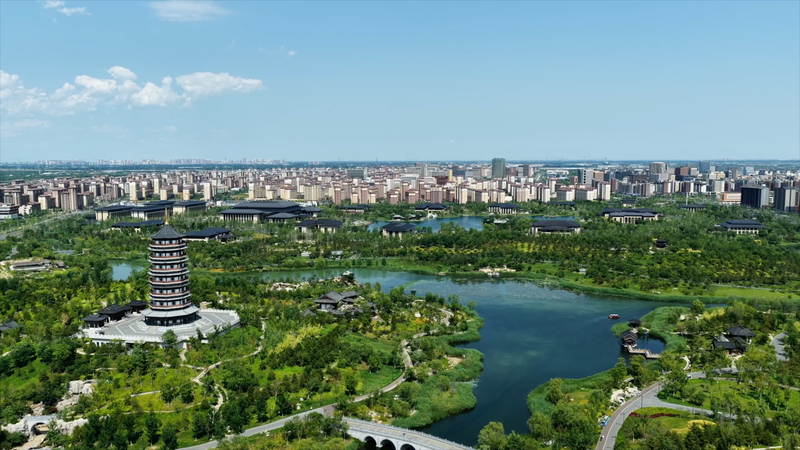
In the heart of northern China, the Xiong'an New Area is emerging as a global blueprint for sustainable urbanism. Far from being just a center for administration and business, the region has placed ecological preservation at the core of its identity, proving that rapid modernization can coexist with environmental stewardship.
A Forested Future
Since its inception in 2017, the Chinese mainland has seen a remarkable transformation in Xiong'an's landscape. Through dedicated reforestation efforts and strategic planting, the area's forest coverage has surged from a modest 11% to an impressive 35.1%. This green expansion is not merely aesthetic; it serves as a vital lung for the region, enhancing air quality and biodiversity.
The "3-1-300" Standard of Living
To ensure that nature is an integral part of daily life, Xiong'an has implemented a rigorous "3-1-300" access standard. This urban planning mandate ensures that every resident is located within 3 kilometers of a forest, 1 kilometer of a green belt, and 300 meters of a public park. With numerous parks already open to the public, residents now experience the luxury of green views from their windows and can reach natural retreats within minutes, significantly boosting the overall quality of urban living.
Economic Integration and Regional Synergy
Beyond its ecological achievements, Xiong'an is a pivotal engine for economic coordination. Over the past nine years, the area has attracted more than 400 branches of state-owned enterprises, signaling strong institutional confidence in the region's future. By diversifying the functional role of the capital, Xiong'an complements Beijing's city life and accelerates the coordinated development of the Beijing-Tianjin-Hebei region.
As Xiong'an continues to grow, its commitment to a green-first approach offers valuable insights for investors, urban planners, and environmentalists worldwide, showcasing a vision where the cities of tomorrow are defined by their harmony with nature.
Reference(s):
cgtn.com