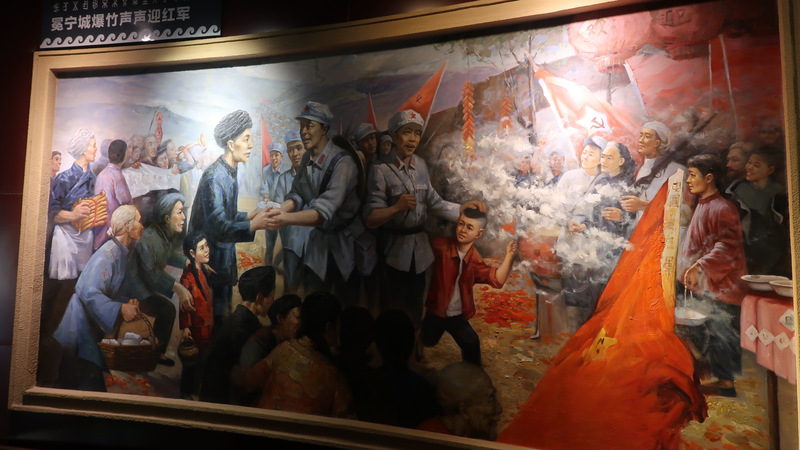
In the annals of the Long March, some of the most pivotal moments were not won through military might, but through diplomacy and mutual trust. One such instance occurred in late May 1935, in the rugged landscapes of Mianning County, southwestern Sichuan.
At the time, the Central Red Army faced a daunting challenge. To continue their journey north and evade pursuing enemy forces, they needed to traverse the ancestral lands of the Yi people. Long oppressed by the Nationalist government, the Yi were deeply suspicious of outsiders, making the terrain as dangerous as the political climate.
The turning point came on May 22, when Red Army Chief of Staff Liu Bocheng met with Yi Chief Xiao Yedan at the serene Yihai Lake. Understanding that authority alone would not win the cooperation of the local people, Liu chose to honor Yi traditions. In a powerful gesture of solidarity, the two leaders performed a ritual of sworn brotherhood, mixing chicken blood with water and drinking it together.
This agreement, which became known as the "Yihai Alliance," transformed a potential conflict into a strategic partnership. For the following seven days, Yi guides provided the Red Army with critical intelligence and safe passage through the treacherous mountains. This cooperation opened the essential path north to the Dadu River, ultimately enabling the army to capture the Luding Bridge and secure their safety.
Remarkably, the passage through Yi territory was achieved without a single shot being fired. The Yihai Alliance remains a poignant example of how cultural respect and the pursuit of common goals can overcome deep-seated hostility, ensuring the survival and success of a historic movement.
Reference(s):
cgtn.com