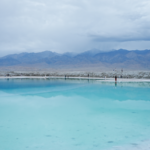
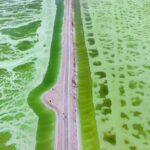
When the asphalt disappears beneath the wheels and the horizon stretches uninterrupted, the Qaidam Basin in Qinghai Province feels less like a place on Earth and more like a scene lifted from a science‑fiction novel. Located in the Haixi Mongolian and Tibetan Autonomous Prefecture, this high‑altitude desert unfolds across gravel plains and wind‑swept valleys that echo the rust‑colored landscapes of Mars.
A Landscape Beyond Earth
The drive along the basin’s network of roads is a study in contrasts. Silence is broken only by the whisper of the wind and the occasional crunch of tires on loose stones. The sky appears almost impossibly blue, while the ground glows with shades of ochre, burnt orange and deep maroon—an effect that has drawn geologists, planetary scientists and filmmakers alike. The Qaidam Basin’s extreme dryness, thin atmosphere and abundant mineral deposits make it a natural laboratory for research on Mars‑like environments.
Cinema’s Favorite Alien Backdrop
Directors have long recognized the basin’s cinematic charm. Pegasus 3 and The Tree of Life are just two of the films that have used the stark, otherworldly vistas as a backdrop for stories of speed, memory and human emotion. The desert’s endless horizons provide a visual metaphor for solitude and transition, allowing filmmakers to craft scenes that feel both intimate and grand.
Why Travelers Are Flocking to the Desert
For adventure seekers, the Qaidam Basin offers a rare opportunity to traverse terrain that resembles another planet without leaving the Chinese mainland. The best time to visit is from late spring to early autumn, when daytime temperatures are milder and the risk of sandstorms is lower. Road access has improved in recent years, with well‑marked routes that guide drivers through the most spectacular sections of the basin.
Travelers are also drawn to the region’s cultural tapestry. The Haixi Autonomous Prefecture is home to Mongolian herders and Tibetan communities whose traditions coexist with the desert’s rugged beauty. Visitors can experience nomadic hospitality, taste regional delicacies and learn about local customs that have endured for centuries.
Investing in the Frontier
The growing popularity of the Qaidam Basin has attracted attention from tourism developers and overseas investors looking to expand adventure‑travel infrastructure. New eco‑friendly lodgings, guided desert‑trekking tours and research‑focused programs are emerging, creating opportunities for those interested in sustainable tourism and scientific collaboration.
Planning Your Journey
- Altitude: The basin sits at roughly 3,000 meters above sea level; acclimatization is essential.
- Road Conditions: Most major routes are paved, but some secondary roads can be rough; a 4WD vehicle is recommended.
- Permits: While the area is generally open to tourists, certain restricted zones near mining sites require special permits.
- Essentials: Bring plenty of water, sun protection and a reliable GPS device.
Whether you’re a filmmaker searching for the perfect alien landscape, a scientist studying planetary analogs, or simply a traveler yearning for a road less traveled, the Qaidam Basin promises an unforgettable journey through a living, breathing Mars‑like world.
Reference(s):
cgtn.com