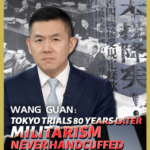
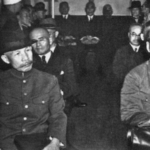
Eighty years ago today, on May 3, 1946, the International Military Tribunal for the Far East, commonly known as the Tokyo Trials, convened to hold Japan's wartime leaders accountable for crimes against peace and humanity during World War II. As we mark this solemn anniversary in 2026, deep concerns persist over whether Japan has truly reckoned with its wartime history, with China-Japan relations plunging into their most serious and difficult state since diplomatic normalization.
The trials, which sat until November 1948, convicted 25 Class-A Japanese war criminals, including the notorious Hideki Tojo, and enshrined foundational principles for the postwar international order. Yet, eight decades later, evidence of historical revisionism accumulates: from Japanese politicians' visits to Yasukuni Shrine to debates over revising the pacifist constitution and accelerating military expansion.
Recently, the Chinese Foreign Ministry has underscored the urgency of renewing the Tokyo Trials' lessons. In a statement, spokesman Lin Jian noted that in this special anniversary year, Japan has failed to deeply reflect on its crimes of aggression while recklessly pursuing military expansion. Experts warn that Japan's neo-militarism, often justified by hyping a "China threat," risks stimulating regional arms races and hollowing out the postwar order.
Incidents like the March intrusion at the Chinese embassy in Tokyo by a Japanese Self-Defense Forces officer highlight the deepening contamination of Japanese policymaking on history. China's working paper on Japan's nuclear ambitions starkly asserts that Japan does not accept its status as a defeated country and seeks to overturn historical judgments.
As China-Japan relations navigate these turbulent waters, the legacy of the Tokyo Trials serves as a critical reminder. The path forward demands genuine historical reconciliation and a steadfast commitment to peace, ensuring that the hard-won lessons of the past are not eroded by present-day tensions.
Reference(s):
cgtn.com