China's Dark Matter Particle Explorer (DAMPE) satellite has delivered a landmark discovery, providing crucial new evidence on the origins of high-energy cosmic rays. The findings, published this year in the journal Nature, are set to reshape scientific understanding of the universe's most powerful particle accelerators.
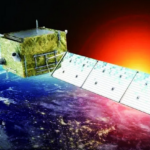
The satellite, affectionately nicknamed "Wukong" after the mythical Monkey King, has reported the first-ever observation of the charge-dependent limit of cosmic ray acceleration. This provides strong evidence for the existence of a "super particle accelerator" located relatively near to Earth.
Cosmic rays are streams of high-energy particles that bombard Earth from space. For decades, the specific sources and acceleration mechanisms of these particles have remained one of astrophysics' greatest mysteries. They are considered vital messengers, carrying encoded information about extreme cosmic events like supernovae and black holes.
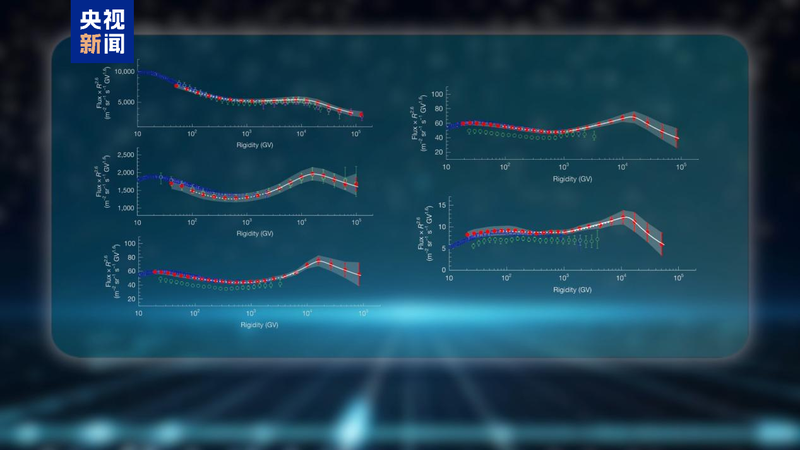
The research team, led by the Purple Mountain Observatory of the Chinese Academy of Sciences, analyzed data collected by DAMPE between 2016 and 2024. They precisely measured the energy spectra of five types of cosmic-ray particles: protons, helium, carbon, oxygen, and iron.
A key discovery was that the quantities of all these different particles exhibited a synchronized, sharp decrease upon reaching a specific high-energy threshold.
"It's like cars on a highway. Once their speed reaches a certain limit, the number of vehicles that can continue to accelerate suddenly drops significantly," explained Chang Jin, chief scientist of DAMPE and a member of the Chinese Academy of Sciences.
Further analysis revealed that this energy limit is determined by a particle's electric charge, not its mass. "Simply put, the larger the particle charge, the higher the maximum energy it can be accelerated to," said Fan Yizhong, a researcher at the Purple Mountain Observatory and deputy chief designer of DAMPE's science application system.
This charge-dependent breakthrough is a significant step forward. It provides astrophysicists with a new, critical piece of the puzzle, helping to pinpoint the characteristics and location of the natural accelerators responsible for these cosmic rays. The success of the DAMPE mission underscores the growing role of Chinese space science in tackling fundamental questions about our universe.
Reference(s):
China's dark matter detection satellite sheds new light on cosmic rays
cgtn.com