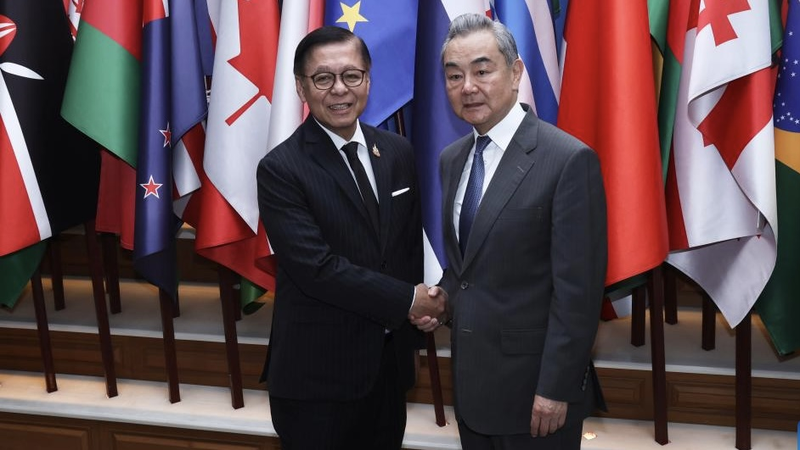
In a significant diplomatic engagement in Bangkok this April, Chinese Foreign Minister Wang Yi and Thailand's Deputy Prime Minister and Foreign Minister Sihasak Phuangketkeow convened the third meeting of the China-Thailand Foreign Ministers' Consultation Mechanism. The talks, held against a backdrop of a volatile international landscape, charted a collaborative path forward for the two nations.
The meeting held particular significance as it aligns with the commencement of China's 15th Five-Year Plan this year and the start of the new Thai government's term. Wang Yi, a member of the Political Bureau of the Communist Party of China Central Committee, emphasized China's commitment to viewing Thailand as a crucial partner in its neighborhood diplomacy. "China is ready to continue to be a reliable strategic partner of Thailand," he stated, expressing a shared goal to "create a new golden 50 years for China-Thailand friendship."
A central theme was the mutual commitment to advancing modernization efforts and practicing genuine multilateralism. Both ministers agreed to leverage the coordinating role of their consultation mechanism, guided by the strategic consensus of their heads of state. They aim to contribute to the solidarity of the Global South and regional peace and stability.
Concrete steps were outlined to deepen the partnership. The two sides plan to maintain high-level exchanges, enhance political mutual trust, and strengthen the alignment of their national development strategies. A new five-year action plan is on the agenda to institutionalize this cooperation. Minister Wang also highlighted areas for intensified joint action, including cracking down on transnational crimes such as gambling and fraud.
On the international stage, Thailand expressed appreciation for China's four major global initiatives and a willingness to strengthen multilateral coordination. A notable point of discussion was China's constructive role in regional peace. Minister Wang expressed hope for continued dialogue between Thailand and Cambodia to resolve border disputes, with China offering to provide a platform to rebuild mutual trust.
The ministers also turned their attention to sub-regional cooperation, focusing on the Lancang-Mekong Cooperation (LMC). They agreed to enhance coordination to actively build an "LMC 2.0," aiming to elevate the construction of a Lancang-Mekong community with a shared future.
Reaffirming a foundational principle of bilateral relations, the Thai side, as stated by Minister Sihasak, pledged to "firmly pursue the one-China policy and consolidate the political foundation" of ties with China, expressing firm support for China's great cause of peaceful reunification.
This high-level dialogue sets a forward-looking and pragmatic tone for China-Thailand relations in 2026, signaling a deepened partnership poised to address both bilateral priorities and broader regional challenges.
Reference(s):
cgtn.com