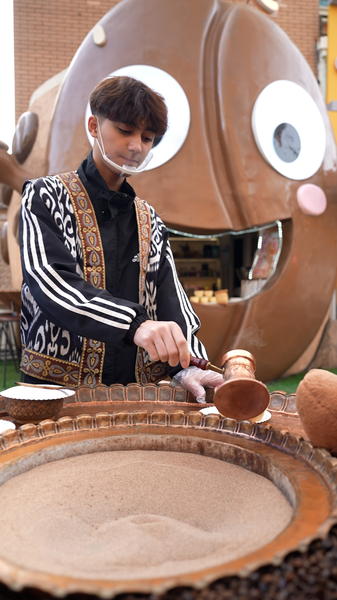
In the heart of Urumqi, a city where ancient trade routes once converged, a modern culinary innovation is captivating both locals and visitors. At the bustling Urumqi International Grand Bazaar, the global ritual of coffee drinking has been reimagined with a distinctly local character, offering an experience that engages all the senses.
The process begins not with an espresso machine, but with a more traditional and theatrical method. Baristas heat a small, specialized pot nestled in a bed of hot sand. This slow, gentle heating method, a nod to time-honored techniques, is said to coax out a uniquely strong yet remarkably smooth flavor from the beans. The resulting brew carries a rich body without heaviness, finishing with a subtle roasted note that lingers on the palate.
But the true twist lies in the serving vessel. Departing from ceramic or paper cups, the coffee is poured into a vessel crafted from naan, the staple flatbread of the region. The bread is expertly baked until it achieves a perfect crispness, then shaped into a sturdy, cup-like form capable of holding the hot liquid. As the coffee slowly soaks into the porous bread, a fascinating alchemy occurs: the drink acquires a delicate, toasty wheat flavor, while the naan itself becomes infused with the rich essence of coffee.
The final instruction to the customer completes the experience: "Sip it, then eat it." Once the coffee is enjoyed, the infused naan cup becomes a savory, aromatic treat itself, ensuring nothing goes to waste. This innovative approach is more than a novelty; it represents a seamless fusion of global commodity and local tradition. It speaks to a broader trend across Asia in 2026, where culinary artisans are creatively blending international influences with deeply rooted regional practices, crafting new experiences that tell a story of cultural exchange and innovation.
For travelers, food enthusiasts, and business observers alike, such developments highlight the dynamic and evolving cultural landscape of Xinjiang and wider Asia, where tradition and modernity continually find new and delicious ways to intersect.
Reference(s):
cgtn.com