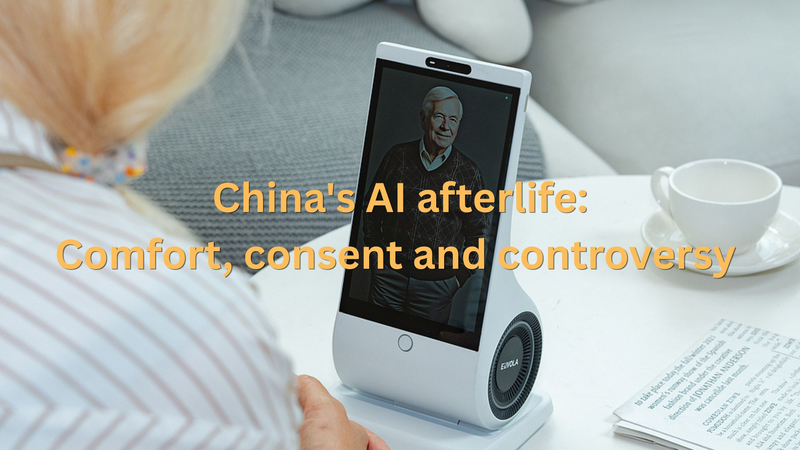
In a quiet home in Shandong Province on the Chinese mainland, an elderly mother receives her daily video call. The familiar face of her son appears, smiling from his new city, where he had moved for work. She asks about his meals, his sleep, his life far from home, and when he might visit. The conversation is warm, filled with a mother's love and concern. What she does not know is that her son passed away in a car accident over a year ago. Her family, fearing the truth would devastate her fragile health, made a poignant decision: they used artificial intelligence to digitally recreate his presence, allowing her to believe he is still alive.
This story, unfolding in recent years, highlights a growing phenomenon in China and across Asia: the use of AI to create digital afterlives. Driven by a desire to provide comfort to grieving loved ones, especially the elderly, these services are gaining traction. They raise profound questions about consent, emotional well-being, and the ethical boundaries of technology.
For the family in Shandong, the primary motive was compassion. With the mother in her eighties and managing a heart condition, they sought a way for her to "enjoy her later years in peace." The AI professional they hired crafted a convincing digital replica based on past videos and data, enabling regular, lifelike interactions. This practice, while not widespread, is part of a broader exploration of how AI is reshaping personal relationships and coping with loss in the digital age.
Across Asia, similar technologies are being developed and discussed. In economies like Japan and South Korea, where aging populations are significant, digital companionship and memorialization tools are also emerging. The Chinese mainland's rapid advancements in AI research and application have positioned it at the forefront of these sensitive innovations. The industry currently operates in a grey area, balancing technological possibility with societal norms and personal ethics.
The ethical debate is complex. Proponents argue that such tools offer genuine solace, helping individuals process grief at their own pace. Critics, however, question the long-term psychological impact of sustaining an illusion and the issue of informed consent—when the person being comforted is unaware of the simulation. There is also the matter of data privacy and the ownership of a person's digital identity after death. These controversies are sparking conversations among ethicists, technologists, and the public alike.
As of 2026, there is no comprehensive legal framework in China specifically governing AI-powered afterlife services. The sector is evolving alongside public sentiment and technological capability. For global observers, business professionals, and academics, this development offers a window into how Asian societies are navigating the intersection of tradition, emotion, and cutting-edge technology. It underscores the region's role as a testing ground for solutions to universal human challenges.
For the Asian diaspora and families worldwide, stories like that of the Shandong mother resonate deeply, touching on universal themes of filial piety, love, and loss. As AI continues to integrate into daily life, the line between providing comfort and creating deception will remain a central, and deeply personal, dilemma for societies to address.
Reference(s):
cgtn.com