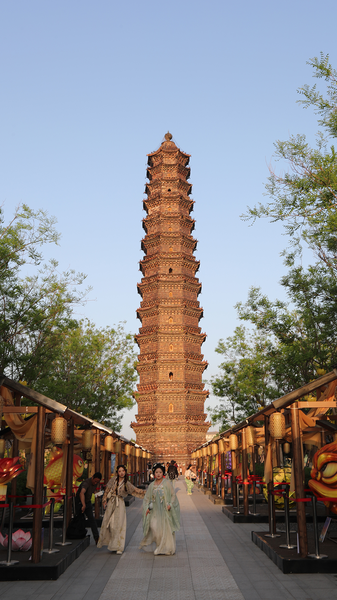
Standing sentinel in the ancient city of Kaifeng, the so-called 'Iron Pagoda' presents a puzzle that has intrigued visitors for centuries. Its name suggests cold, hard metal, yet its true nature is a testament to the artistic ingenuity of China's Northern Song Dynasty.
Constructed in 1056 AD, this architectural marvel is not forged from iron but meticulously assembled from glazed bricks. Their deep, burnished brown hue—a result of a unique glaze formula—creates the enduring illusion of an iron-clad structure, giving the pagoda its famous moniker.
Approaching its 1,000th year, the 13-story, octagonal tower remains a resilient symbol of Kaifeng's historical significance as a Song Dynasty capital. It has withstood wars, floods, and the passage of time, its intricate carvings of Buddhas, celestial beings, and floral motifs still remarkably preserved on its glazed surface. Each of its 104 bells, hanging from the upturned eaves, is said to chime with the wind, a soundscape that has filled the air for nearly a millennium.
For historians and architects, the pagoda is a living textbook of ancient Chinese brickwork and glazing techniques. For the global traveler, it is a journey back to the zenith of classical Chinese civilization. As the landmark nears its millennial anniversary in the coming decades, its story offers a powerful reminder of China's profound cultural continuity and the timeless allure of its historical treasures.
Reference(s):
cgtn.com