In a groundbreaking feat of computational astronomy, an international consortium spearheaded by scientists from China has unveiled the largest and most detailed cosmological simulation ever created. The project, named "HyperMillennium," provides researchers with an unprecedented digital laboratory to trace the evolution of the cosmos over billions of years.
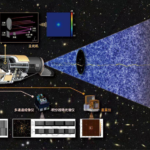
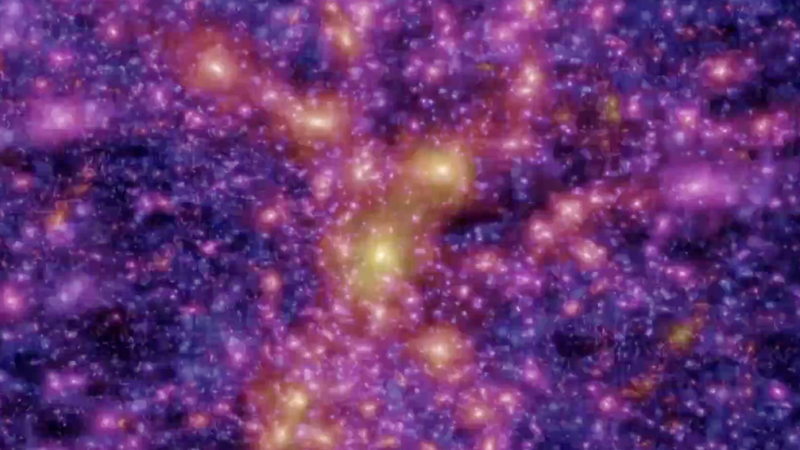
Imagine a cube of virtual space measuring 12 billion light-years on each side, populated by 4.2 trillion particles representing dark matter. Using advanced N-body numerical simulation techniques, the team meticulously charted the gravitational dance of these particles from shortly after the Big Bang to the present day. The result is a staggeringly detailed "digital universe" where scientists can pause, rewind, and examine the formation of cosmic structures.
"The simulation was completed with high force resolution and time accuracy, and also made a breakthrough in computational scale," explained Wang Qiao, a researcher at the National Astronomical Observatories of the Chinese Academy of Sciences. "It allows scientists to study extremely rare, massive cosmic structures in fine detail while maintaining strong statistical power."
To breathe life into this virtual cosmos, the team infused it with physical models of galaxy formation. This process generated a rich catalog detailing the positions, brightness, and other key properties of billions of simulated galaxies. This treasure trove of data offers crucial theoretical underpinning for the study of dark matter and dark energy, the mysterious components dominating the universe. It will also be instrumental in interpreting data from next-generation observational projects, including the upcoming China Space Station Telescope and the European Space Agency's Euclid mission.
The computational challenge was monumental. The research team relied on self-developed software called PhotoNs, optimized for China's domestic supercomputers. After over a decade of refining algorithms, they harnessed more than 10,000 accelerator cards to perform the calculations, consuming over 100 million CPU core-hours and generating approximately 13 petabytes of data.
The scientific community has hailed the achievement. "This simulation is a computational marvel that will help unlock secrets of dark energy and the early universe," said Mike Boylan-Kolchin, a professor at the University of Texas at Austin. He noted its unprecedented size and resolution would make it a touchstone for cosmological research for years to come.
Volker Springel, director of the Max Planck Institute for Astrophysics in Germany, stated that HyperMillennium "redefines the limits of numerical cosmology," enabling new high-precision tests of the standard cosmological model.
In a recent paper published in the journal Monthly Notices of the Royal Astronomical Society, the team demonstrated the simulation's accuracy. They compared its output against real-world observations of the Abell 2744 galaxy cluster, located four billion light-years away. The virtual and observed structures matched remarkably, down to the pixel level, affirming the validity of current cosmological models even in complex environments.
In a significant move for open science, the first batch of simulation data has been released to the global research community via the National Astronomical Data Center. This opens the door for astronomers and astrophysicists worldwide to explore this digital cosmos, potentially unlocking further secrets of our universe's grand narrative.
Reference(s):
cgtn.com