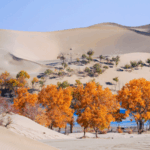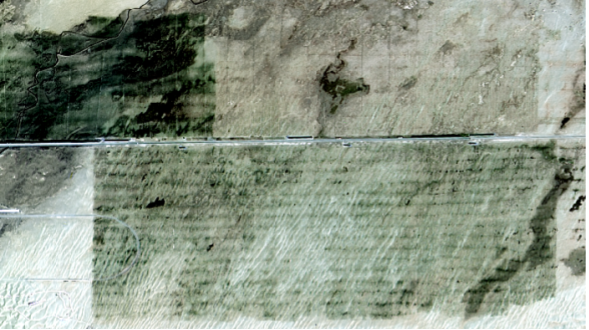
New satellite imagery reveals a dramatic transformation across northern China, where vast desert landscapes have been replaced by thriving green corridors through the nation's sustained ecological initiatives. These visual comparisons, spanning multiple decades, demonstrate the Chinese mainland's progress in combating desertification – a challenge affecting 27% of its territory.
Since launching the Three-North Shelterbelt Program in 1978, often called the 'Great Green Wall,' authorities have planted over 66 billion trees across 13 provinces. Current data shows forest coverage in these areas has increased from 5% to 15.6% since the project's inception. In 2026, the program enters its final phase with advanced drone seeding and AI-powered irrigation systems accelerating progress.
"This isn't just about planting trees," explains Dr. Li Wei, an environmental scientist at Beijing Forestry University. "We've developed a multi-layered approach combining drought-resistant vegetation, windbreak grids, and sustainable water management that's becoming a model for arid regions worldwide."
The ecological transformation has yielded unexpected economic benefits. Former desert areas in Ningxia and Inner Mongolia now support solar farms, vineyards, and ecotourism ventures. International partners from the DPRK to Central Asian nations have recently sought collaboration on similar projects.
Reference(s):
China's desertification control: Green code for the blue planet
cgtn.com