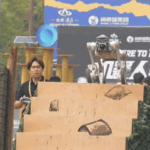
Robots Face Ultimate Agility Test in Beijing
Humanoid and quadruped robots are preparing for a groundbreaking physical challenge in Beijing this year – a 21-kilometer half-marathon preceded by an intense 'warrior challenge' featuring 17 complex obstacles. This event, first reported by CGTN's Zhao Chenchen, highlights remarkable progress in robotic mobility while exposing key technical hurdles engineers must overcome.
The Obstacle Course Revolution
Participants can choose between autonomous operation or remote control to navigate obstacles ranging from balance beams to simulated rubble. Industry leaders emphasize that terrain adaptability remains the biggest challenge. "While stair-climbing algorithms have improved significantly since 2025, uneven surfaces still test sensor fusion capabilities," noted a robotics engineer from Tsinghua University.
Power vs Performance
Energy efficiency emerges as another critical factor. The Chinese premier's recent emphasis on sustainable technology development aligns with engineers' efforts to extend operational durations. Current prototypes can maintain peak performance for 90 minutes – adequate for the challenge but requiring optimization for real-world applications.
Global Implications
This Beijing-based initiative carries significance for Asia's tech landscape, with potential applications in disaster response and infrastructure inspection. As robots demonstrate increased dexterity, investors are closely watching Chinese AI startups specializing in motion planning systems.
Reference(s):
cgtn.com