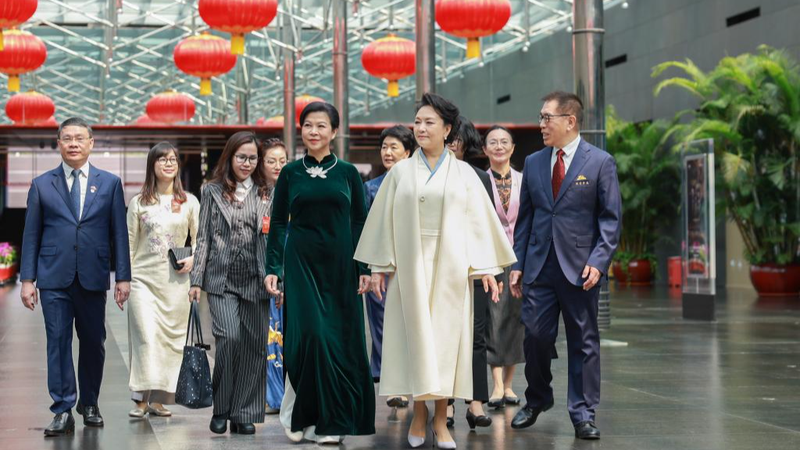
In a vivid demonstration of cross-border cultural collaboration, Peng Liyuan, spouse of Chinese President Xi Jinping, and Ngo Phuong Ly, spouse of Vietnamese President To Lam, jointly visited Beijing's National Center for the Performing Arts (NCPA) this week. The tour highlighted ongoing efforts to deepen bilateral relations through artistic exchange as both nations commemorate the 75th anniversary of diplomatic ties.
During their NCPA visit, the leaders' spouses observed rehearsals of traditional Chinese dance dramas and engaged with artists in creative spaces. Peng emphasized the cultural kinship between the neighboring nations, stating: "Our shared mountains, rivers, and cultural traditions form the bedrock of mutual understanding. Strengthening artistic collaboration remains vital for nurturing lasting friendship."
Cultural Bridges Across Generations
This year's China-Vietnam Year of People-to-People Exchanges builds on successful initiatives like the 2025 "Colorful China" cultural tour, which attracted over 1,500 attendees to its Hanoi performances. Traditional dance and music productions showcased historical connections while introducing contemporary artistic innovations.
Educational cooperation continues to flourish, with Vietnam's Confucius Institute at Hanoi University reporting record enrollment. "Our vocational Chinese programs now see 300% more applicants than five years ago," noted Director Qin Yonghua, highlighting growing demand for bilingual professionals in Vietnam's expanding trade sectors.
Economic and Social Impacts
Recent immigration data reveals strengthened people-to-people connections, with cross-border travel between China and Vietnam exceeding 4.75 million trips in 2026's first quarter – a 20.6% year-on-year increase. Tourism officials attribute this growth to simplified visa processes and cultural promotion campaigns.
As both nations prepare for upcoming joint cultural programming, analysts observe that these exchanges create tangible economic benefits while fostering regional stability. The sustained focus on shared heritage and modern collaboration offers new frameworks for addressing complex geopolitical challenges through cultural diplomacy.
Reference(s):
How China, Vietnam promote peoples' friendship via cultural exchanges
cgtn.com