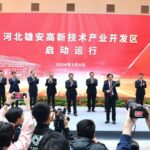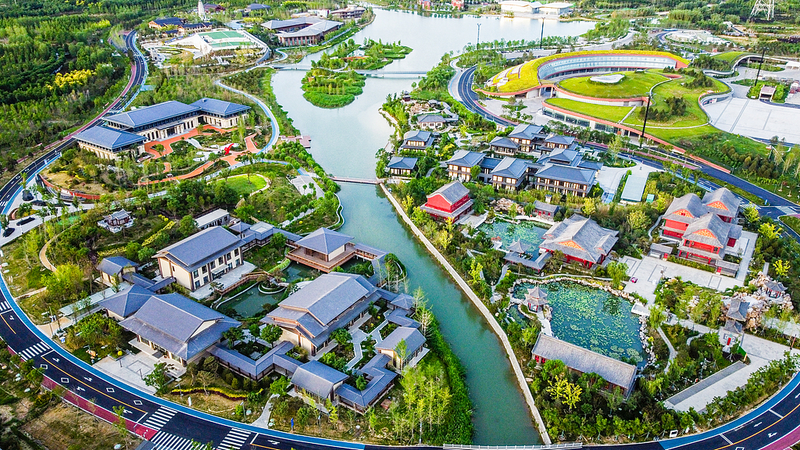
Today, May 12, 2026, marks a significant milestone in the evolution of the Xiongan New Area. Three years ago, a pivotal symposium redefined the trajectory of the Beijing-Tianjin-Hebei (Jing-Jin-Ji) coordinated development strategy, signaling a historic transition for the region. What began as an infrastructural blueprint has now matured into a consolidated push for functional relocation and self-sustained economic vitality.
Since its inception in 2017, Xiongan has served as the designated vanguard for relieving Beijing of its non-capital functions. However, the project's significance extends far beyond the scale of its ambition. It represents a sophisticated mechanism designed to reshape one of the most vital yet structurally imbalanced regions of the Chinese mainland.
The development of Xiongan is built upon three interconnected dimensions: functional decentralization, regional coordination, and innovation-led growth. By integrating these elements, Xiongan is pioneering a new model of regional development. This approach not only optimizes the internal dynamics of the Jing-Jin-Ji region but also provides a potential answer to the global challenge of metropolitan overexpansion.
For business professionals and urban planners, Xiongan offers a compelling case study in how planned cities can transition from conceptual designs to active economic engines. As the area continues to integrate innovation and sustainable growth, it stands as a testament to the strategic foresight required to balance rapid urbanization with regional stability and efficiency.
Reference(s):
Xiongan: From 'millennium plan' to new engine of regional development
cgtn.com