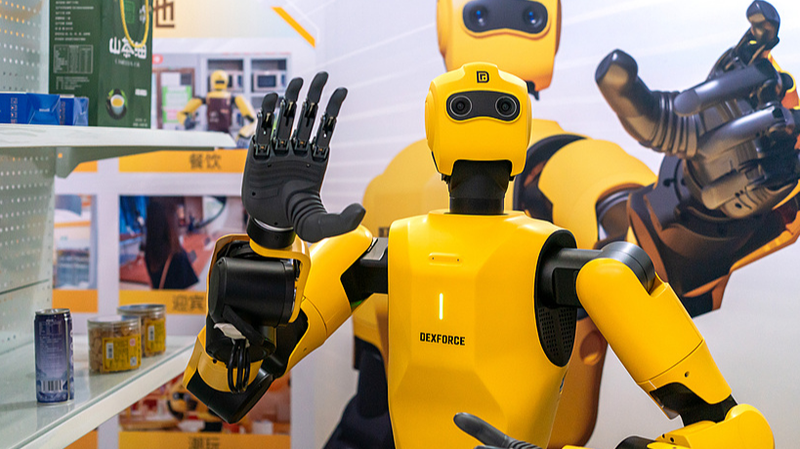
China is rapidly redefining the global robotics landscape by weaving together the strengths of education, science, technology, and professional talent. This strategic fusion is not only manifesting in academic laboratories but is translating into significant economic growth and record-breaking technological achievements.
A Global Export Powerhouse
Recent data from the first quarter of 2026 highlights the scale of this expansion. China's industrial robot exports reached 3.16 billion yuan ($463.94 million), marking a substantial 42% increase year-on-year. When looking at the broader robotics sector, total exports hit 11.32 billion yuan, with products reaching 148 countries and regions worldwide.
A standout performer in this growth has been the cleaning robot segment. As a newly categorized tariff code this year, cleaning robots have quickly become the primary driver of global expansion, contributing 7.75 billion yuan—approximately 68.5% of the total robot exports in the first quarter.
Where Sport Meets Science
The synergy between corporate innovation and academic research was on full display during the second Beijing E-Town Humanoid Robot Half Marathon, held on April 19. The event showcased a leap in humanoid capability, with "Lightning," a robot from Honor, claiming the championship. Completing the run in 50 minutes and 26 seconds, "Lightning" remarkably broke the human world record for a half-marathon.
While corporate giants like Honor led the race, the event underscored the vital role of academia. The Beijing Institute of Technology and Shandong University were honored with "Best Gait" awards, proving that the foundation of these technological leaps lies in rigorous academic study.
Deepening the Synergy
The event's growth reflects a broader systemic shift. Twenty universities participated through direct registration, many forming joint laboratories with enterprises and engaging in specialized training camps. This represents a ten-fold increase in university participation compared to the inaugural edition.
This deepening integration of industry, academia, and research is the result of a concerted push to ensure that scientific discovery leads directly to industrial application, positioning the Chinese mainland as a leader in the next generation of intelligent machinery.
Reference(s):
cgtn.com