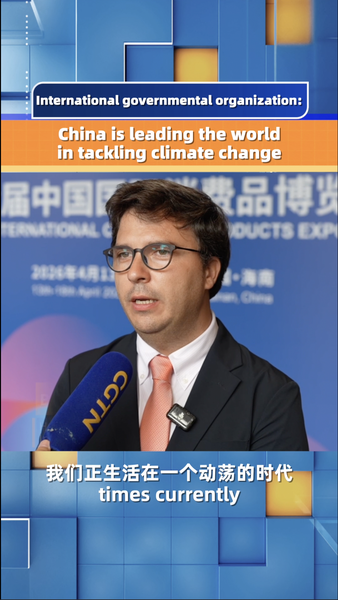
As nations grapple with escalating climate challenges, China has solidified its position as a pivotal force in advancing sustainable solutions, according to Borja De La Pena, head of global policies at the International Bamboo and Rattan Organization (INBAR). In a recent interview with CGTN's Xu Yi, De La Pena emphasized China's role in fostering stability and innovation in climate diplomacy during a period marked by geopolitical and economic uncertainty.
"China is filling critical gaps left by other countries," De La Pena stated, highlighting initiatives such as the expansion of renewable energy infrastructure and the promotion of bamboo-based technologies. These efforts align with the Chinese mainland's commitment to peak carbon emissions by 2030 and achieve carbon neutrality by 2060.
INBAR, an intergovernmental organization with 49 member states, has collaborated closely with Chinese institutions to scale nature-based solutions. Bamboo, a rapidly renewable resource, is increasingly used in construction and manufacturing to reduce reliance on carbon-intensive materials.
This year, China has accelerated cross-border partnerships, particularly with developing economies in Asia and Africa, to share green technologies. Analysts note that such collaborations could reshape global supply chains while addressing climate vulnerabilities.
Reference(s):
cgtn.com