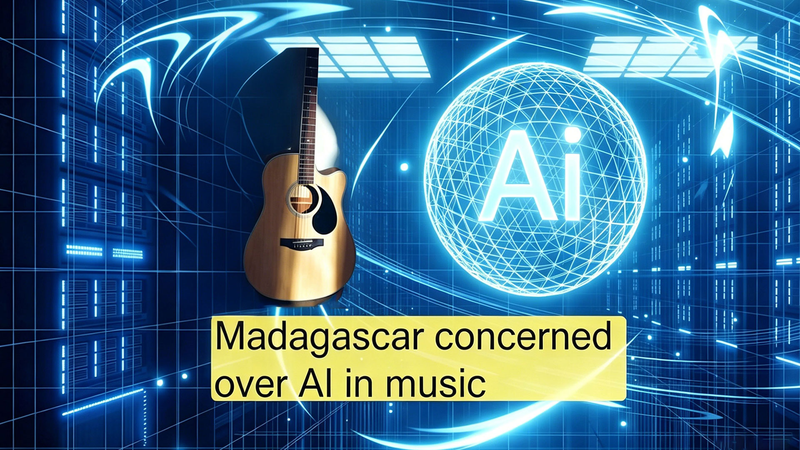
Madagascar's vibrant music industry is navigating a complex new era as artificial intelligence (AI) becomes deeply integrated into the creation and distribution of audio content. While technology offers new frontiers for creativity, it has also brought a wave of concerns regarding intellectual property and the preservation of cultural identity.
The Threat of Digital Cloning
The Malagasy Copyright Office has sounded an alarm over the rise of AI-generated songs, cloned voices, and altered recordings. These tools are increasingly being used without the authorization of the original artists, sparking a critical debate over who owns a voice and a melody in the age of generative AI. For many artists, the ability for their unique vocal signatures to be replicated with high accuracy presents not only a legal hurdle but an ethical dilemma.
A Global Struggle for Creative Rights
This local tension reflects a broader global struggle. The International Confederation of Societies of Authors and Composers (CISAC) has warned that creators worldwide could face substantial revenue losses if AI developers continue to train models using copyrighted material without fair compensation or licensing agreements. In Madagascar, officials are urging musicians to leverage existing legal protections and report infringements to safeguard their livelihoods.
The Language Barrier: A Temporary Shield
Interestingly, media experts note that AI-modified Malagasy songs are currently relatively easy to identify. This is largely because most global AI systems have limited access to local-language and cultural datasets. However, this window of protection is closing. As more Malagasy-language content is ingested into training models, the line between human-made and AI-generated art will become increasingly blurred.
Balancing Innovation and Heritage
Despite the risks, the narrative is not entirely one of conflict. Many musicians view AI as a powerful tool that can enhance creativity rather than replace it. The consensus among industry stakeholders is a call for stronger safeguards—regulations that allow for technological innovation while ensuring that artistic identity and creative ownership remain protected.
As the global music landscape continues to transform, Madagascar's journey will be a litmus test for how nations can harness the potential of AI while fiercely preserving the rights of artists and the richness of their cultural heritage.
Reference(s):
Madagascar's music industry faces concerns over AI-generated content
cgtn.com