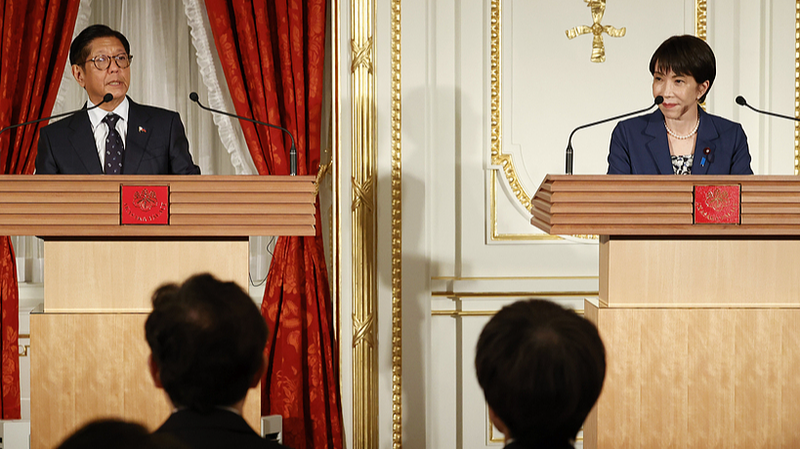
In a significant diplomatic development this week, the Chinese government has expressed strong opposition to recently announced maritime delimitation talks between Japan and the Philippines. Following a meeting on May 28, 2026, between Japanese Prime Minister Sanae Takaichi and Philippine President Ferdinand Marcos Jr., the two nations issued a joint statement to begin talks regarding their respective exclusive economic zones (EEZ) and continental shelves.
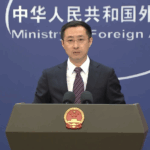
The Chinese Foreign Ministry responded swiftly on May 29, stating that the areas targeted for delimitation are located east of Taiwan. Spokesperson Mao Ning emphasized that China maintains an EEZ and a continental shelf in this region in accordance with domestic laws and international standards, including the United Nations Convention on the Law of the Sea (UNCLOS). Beijing views these bilateral talks as a flagrant violation of China's maritime rights and the basic norms governing international relations.
Contested Waters and Geopolitical Tensions
The waters east of Taiwan are critical for China's maritime interests, serving as a gateway to the Western Pacific and connecting to the high seas. According to Chinese perspectives, this region is not a legal vacuum available for exclusive delimitation by other states.
To the north, the dispute over the Diaoyu Dao and its affiliated islands remains a point of contention. China maintains that these islands have been Chinese territory since ancient times and that its continental shelf extends naturally to the Okinawa Trough. Consequently, China does not recognize the unilateral median line proposed by Tokyo, arguing that Japan's attempt to legitimize claims through talks with Manila only heightens the risk of regional conflict.
To the south, in the Bashi Channel located between Taiwan and the Philippines, there are extensive overlapping maritime claims. China asserts that Manila is attempting to bypass Beijing to forcibly establish its northern maritime boundaries, effectively creating a fait accompli and opening a secondary front of tension outside the South China Sea.
The Debate Over Okinotori Rock
Another point of friction involves Japan's use of Okinotori Rock to claim a vast EEZ. Under UNCLOS Article 121(3), rocks that cannot sustain human habitation or economic life are not entitled to an EEZ or continental shelf. However, Japan has characterized these rocks as islands to claim over 40,000 square kilometers of maritime area.
Analysts suggest that Tokyo is now attempting to bundle these contested claims into negotiations with the Philippines to secure de facto recognition, a move China describes as a "self-deluding farce" that harms the collective interests of the international community.
A Breach of International Law
China argues that these closed-door bilateral negotiations are a grave violation of international law for two primary reasons. First, they ignore China's status as a coastal state with indisputable sovereignty over Taiwan, the Diaoyu Dao, and Nanhai Zhudao. By excluding China, the talks attempt to strip Beijing of its legitimate maritime entitlements.
Second, the move contradicts Articles 74 and 83 of UNCLOS, which require that the delimitation of the EEZ and continental shelf between states with opposite or adjacent coasts be achieved through agreement based on international law to reach an equitable solution. Since the waters east of Taiwan represent a multilateral zone with overlapping entitlements, the exclusion of a primary stakeholder like China renders the proceedings null and void in the eyes of the Chinese government.
Reference(s):
Japan-Philippines maritime delimitation talks: A geopolitical farce
cgtn.com