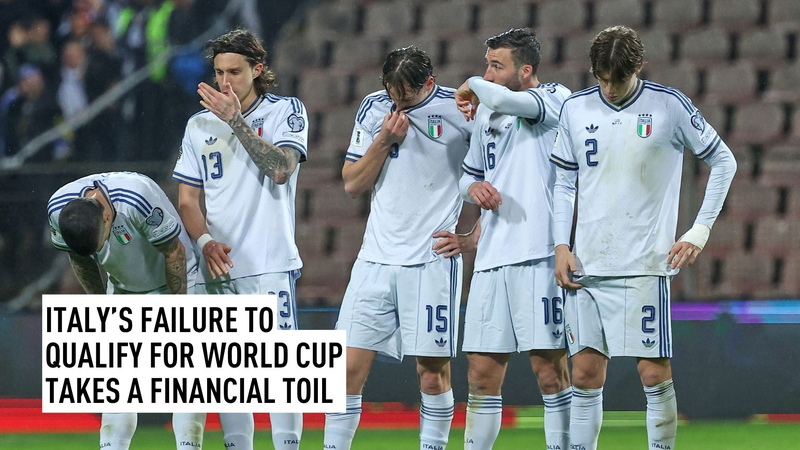
As the global football community prepares for the FIFA World Cup kicking off in just two weeks, a noticeable void remains: the absence of the four-time champions, Italy. Following a dramatic penalty shootout defeat to Bosnia-Herzegovina during the qualifying stages, the Azzurri find themselves once again on the sidelines, a blow that resonates far beyond the stadium.
For Italy, this absence is not merely a sporting disappointment but a significant economic setback. According to a study by Open Economics, cited by La Repubblica, the country is facing an estimated economic shortfall of 1.5 billion euros (approximately $1.75 billion). This financial hit is expected to result in the loss of around 4,000 jobs.
The ripple effects of this absence are widespread. Direct losses are anticipated in ticket sales, merchandise, television rights, sponsorship, and prize money. However, the impact extends into broader sectors; tourism, hospitality, and advertising are likely to see a downturn as the usual surge of supporters gathering in fan parks, bars, and public viewing areas fails to materialize.
Professor Michele Costabile of Luiss University emphasizes that the damage transcends revenue. He notes that there is immense economic value linked to intangibles, such as the image and self-esteem of a country, which suffers when it is missing from a top-level global community.
Addressing Structural Decay
Italy's failure to qualify for three consecutive World Cups has ignited a fierce debate regarding the structural integrity of the nation's football system. Francesco Saverio Intorcia, Sports Editor-in-Chief of La Repubblica, suggests that a conflict of interest between club priorities and the national team has fueled the decline. He points out that clubs increasingly opt for more affordable foreign players who meet immediate needs but do not necessarily strengthen the national squad, arguing that systemic reform is now essential.
Hope for a turning point is pinned on the upcoming leadership changes within the Italian Football Federation, which is scheduled to elect a new president this June. Many stakeholders view this election as a critical opportunity to launch a rebuilding process centered on long-term reform and youth development.
The cultural impact on the next generation is already evident. At the DF Academy in Rome, coach Cesare Maiorca observes that many young players have grown up without ever seeing their national team compete on the world's biggest stage. This void has led young Italians to seek sporting inspiration elsewhere. Francesco Florio, President of the DF Academy, notes that youth now look to role models in other sports, such as Jannik Sinner in tennis or Kimi Antonelli in Formula One, rather than national football idols.
Having last appeared at a FIFA World Cup in 2014, Italian fans now face a long wait, with the next opportunity for the Azzurri to return to the global stage not arriving until at least 2030.
Reference(s):
World Cup absence hits Italy – on the pitch and in the economy
cgtn.com