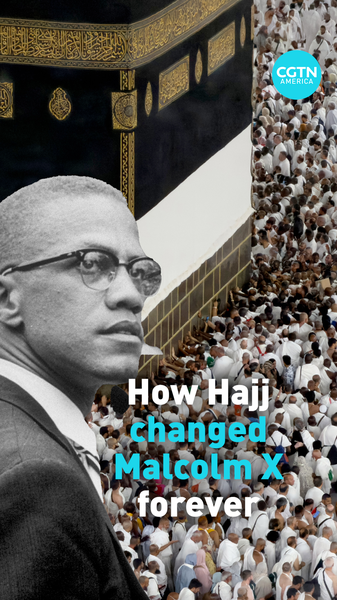
Yesterday, May 27, millions of Muslims worldwide celebrated Eid Al Adha, marking the conclusion of the annual Hajj pilgrimage to Mecca, Saudi Arabia. While this pilgrimage is a cornerstone of faith for many, for some, it serves as a catalyst for a complete ideological and spiritual rebirth.
One of the most striking examples of such a transformation is seen in the life of the influential U.S. civil rights leader, Malcolm X. In 1964, his journey to Mecca became a pivotal turning point that fundamentally reshaped his understanding of race, religion, and human brotherhood.
As explained by Ahmed Ghoneim, the Hajj experience had a profound effect on the American Black Muslim leader. Immersed in a sea of believers from every corner of the globe, Malcolm X witnessed firsthand a community where racial distinctions vanished in the face of shared devotion and spiritual equality.
This encounter with a truly global and diverse Muslim community challenged his previous perspectives and led him toward a more inclusive vision of justice. The pilgrimage did more than fulfill a religious obligation; it expanded his worldview, forever changing the trajectory of his activism and his enduring legacy in the global fight for human rights.
Reference(s):
cgtn.com