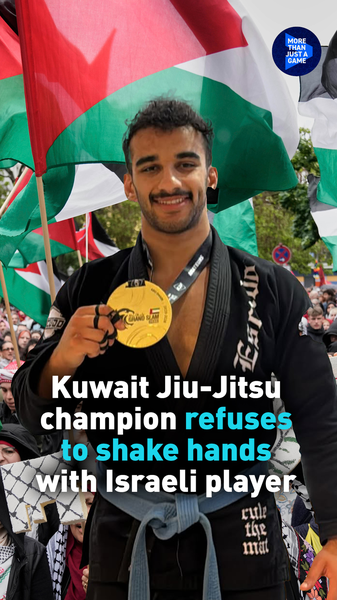
In a moment that has sparked widespread debate over the intersection of athletics and geopolitics, Kuwaiti Jiu-Jitsu champion Jassim Al-Hatem refused to shake hands with an Israeli opponent during the podium ceremony at the Abu Dhabi Grand Slam in the United Arab Emirates.
Al-Hatem, who secured the gold medal in a commanding performance, declined the gesture of sportsmanship toward bronze medalist Yoav Manor. The incident, captured on video, has since drawn significant attention from sports enthusiasts and political analysts alike.
Following the event, Al-Hatem addressed the situation via social media, clarifying that he had informed the Israeli player prior to the ceremony that he would not engage in a handshake. He stated that both athletes should remain in their respective corners during the proceedings. Al-Hatem further elaborated on his stance, asserting that his nation, Kuwait, does not recognize the "zionist entity" and argued that Israel should be banned from the Olympic Games. In his statement, the champion emphasized that human values and principles must be upheld and practiced within the world of sport.
The reaction from the Israeli side highlighted a contrasting perspective on the role of politics in competition. Gaim Ghozali, an Israeli mixed martial artist who shared the footage of the encounter, expressed his hope that the sporting arena remains a neutral ground. Ghozali stated that he hopes people stop bringing politics into sports, particularly involving countries with which there has not been a direct, genuine conflict.
The incident underscores the ongoing tension that often surfaces when international sporting events provide a platform for athletes from regions with deep-seated political disagreements. As global audiences continue to follow the developments of the Abu Dhabi Grand Slam, the conversation remains centered on whether sports should serve as a bridge for diplomacy or a reflection of political conviction.
Reference(s):
Kuwaiti Jiu-Jitsu champion refuse to shake hands with Israeli player
cgtn.com