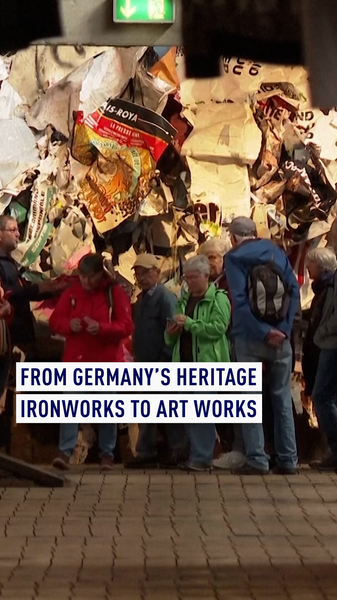
In a striking fusion of industrial history and contemporary creativity, the Urban Art Biennale 2026 has transformed one of Europe's most formidable industrial landmarks into a living gallery. Fifty artists, representing 17 countries across three continents, have gathered at Germany's Völklingen Ironworks to contribute to a tradition that has flourished over the last fifteen years.
A Monument of Industrial Heritage
The Völklinger Hütte is not merely a backdrop for the event; it is a site of global significance. Sprawling across 60,000 square meters, the location is a complex maze of towering chimneys, massive furnaces, and rusting infrastructure situated near the German-French border. Its importance is recognized by UNESCO, which added the ironworks to the World Heritage list in 1994.
The site stands as the only intact example of an integrated ironworks from the 19th and 20th centuries in Western Europe and North America. Since production ceased in 1986, the facility has been meticulously preserved. By maintaining the site exactly as it was during its operational peak in the mid-1930s, the location offers a raw, atmospheric sense of industrial decay that serves as a powerful catalyst for modern artists.
Where Art Meets Industry
For the participants of the Urban Art Biennale, the decaying steel and concrete are essential to the creative process. The raw energy of the site mirrors the origins of street art and graffiti, which frequently emerged from similar industrial environments.
Ralf Beil, General Director of the World Cultural Heritage Site Völklingen Ironworks, emphasizes the symbiotic relationship between the location and the creators. "This location is at the core of street art and graffiti art. It all began in industrial places like this," Beil noted. He recounted an artist's sentiment that the site itself is the "hero," and the artists are simply joining in, creating works that exist in harmony with the infrastructure of the Völklinger Hütte.
As the 2026 Biennale continues to draw global attention, it underscores the evolving role of industrial heritage sites—not just as museums of the past, but as dynamic spaces for current cultural expression and international exchange.
Reference(s):
Artworks at the ironworks: Germany's immersive UNESCO experience
cgtn.com