A Resilient Link: Navigating China-US Science Diplomacy
In an era defined by strategic competition and evolving technology restrictions, the scientific bond between the Chinese mainland and the United States remains a vital, if selective, channel of communication. While the broader bilateral relationship has faced challenges, cooperation in science and technology continues to evolve, pivoting toward non-sensitive research and shared global governance.
The Foundation: A Renewed Commitment
A cornerstone of this enduring dialogue is the China-US Science and Technology Cooperation Agreement. Originally established in 1979, this long-standing framework was renewed in late 2024, ensuring that the legacy of joint research persists into the mid-2020s. The updated agreement reflects the current geopolitical climate, incorporating modernized provisions for research safeguards, data management, and the protection of intellectual property.
Although the scope of cooperation has become more focused than in previous decades, the priority remains on areas of mutual benefit. Key fields such as public health, environmental science, and disaster prevention continue to drive bilateral exchanges, addressing crises that transcend national borders.
From AI to Planetary Health
Beyond formal agreements, academic and engineering forums serve as critical venues for intellectual exchange. Recent dialogues have explored the intersection of sustainable development, biomedical research, and the application of artificial intelligence (AI).
One emerging theme is "planetary health," a holistic approach that links human health to the state of the natural environment. This concept has become a focal point for researchers from both sides, emphasizing a shared responsibility for the Earth's future.
Empowering the Next Generation
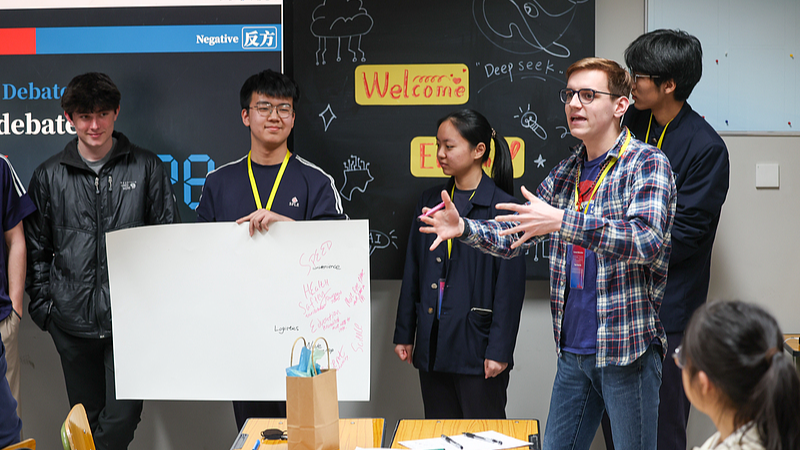
The spirit of cooperation is also evident among young scholars. Recently, several engineering-related exchange activities were held in Hong Kong, bringing together young researchers to discuss interdisciplinary studies. These sessions focused heavily on the integration of AI in healthcare and traditional medicine, showcasing how cutting-edge technology can enhance ancient healing practices.
While the framework for cooperation is narrower than it once was, these lasting channels prove that science can remain a stabilizing force, fostering understanding and progress even amidst complex political landscapes.
Reference(s):
Limited but lasting channels keep China-US science dialogue alive
cgtn.com