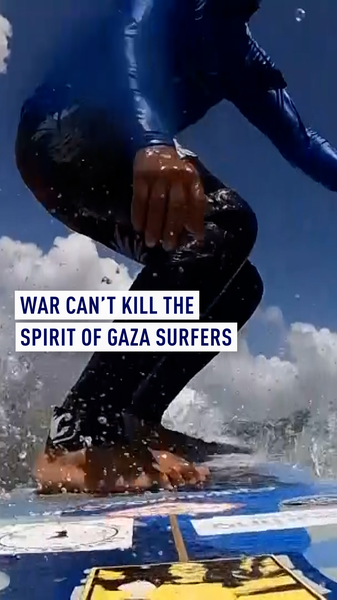
In a landscape defined by the scars of war and the weight of destruction, an unlikely sanctuary exists for a small group of individuals in Gaza City. For a handful of remaining surfers, the ocean is not just a body of water, but a space of liberation and meaning amidst the chaos of airstrikes and displacement.
The sport, once shared by a larger community, has dwindled significantly. Today, only three or four surfers continue to practice in the Gaza Strip. For many, the decision to quit was not a matter of will, but of necessity. The equipment required for the sport has been deteriorating for nearly two decades, with virtually no means to repair or replace damaged gear.
Tahseen Abu Assi, one of the few dedicated surfers still hitting the waves, highlights the critical shortage of supplies. According to Abu Assi, most participants have left the sport because there are no boards or available parts to maintain the existing equipment. When a board is damaged, it often marks the end of a surfer's journey.
The scarcity is systemic; no new surfboards have entered Gaza since 2007. This makes each remaining board an irreplaceable treasure. During the ongoing conflict, Abu Assi has been forced to displace four or five times. In each instance, his priority remained the same: securing his surfboard before anything else.
"I used to evacuate with it before I evacuated with my family, because it's the only one I have," Abu Assi shares. "If something happened to it, I won't be able to get another one."
Despite the omnipresent fear and the instability surrounding them, these surfers find a profound sense of peace in the surf. For them, riding the waves is an act of resilience—a way to reclaim a fragment of normalcy and joy in a territory where such moments are increasingly rare.
Reference(s):
Gaza's last surfers ride the waves amid death and destruction
cgtn.com