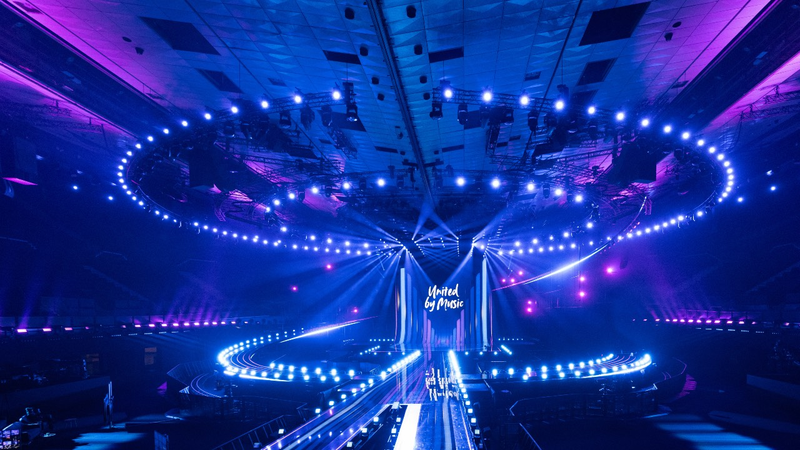
For seven decades, the Eurovision Song Contest has been far more than a simple music competition. It has served as a crucible for global icons like ABBA and Celine Dion, a flashy symbol of European integration, and a high-visibility stage for social change. As the annual event prepares for its 70th anniversary in Vienna later this month, it continues to be a unique intersection where art meets diplomacy.
The contest, which brings together performers selected by public broadcasting services from across Europe and beyond, is known for leaving audiences both delighted and baffled. However, the upcoming milestone celebration in Vienna is unfolding against a backdrop of significant tension. There are growing fears that boycotts over Israel's participation, following its attacks on Gaza, could overshadow the expected outpourings of national pride and the event's signature abundance of glitter.
This intersection of music and politics is not new. Eurovision has long been a mirror reflecting the geopolitical fractures of the era. During the Cold War, the absence of Eastern Bloc countries was a stark reminder of a divided continent. In the 1960s, the contest became a focal point for protests regarding the participation of Spain and Portugal under the dictatorships of General Francisco Franco and Antonio de Oliveira Salazar, respectively.
The ripples of regional conflict have frequently reached the Eurovision stage. The 1974 Turkish campaign in Cyprus led to Greece's withdrawal, while more recent tensions between Georgia and Moscow, as well as the conflict over the Nagorno-Karabakh region between Armenia and Azerbaijan, have left visible marks on the competition's history.
Most recently, the 2022 competition saw Russia excluded due to its offensive in Ukraine, a move that underscored the contest's role as a barometer for international relations. In a poetic turn of events, the Ukrainian contestant went on to win that year, highlighting the event's ability to provide a platform for national resilience.
As Vienna gears up for the 70th edition, Eurovision remains a fascinating study in contradictions: a celebration of unity that often exposes the deepest divisions of the global political landscape.
Reference(s):
cgtn.com