In our modern era of rapid globalization, the perennial question arises: how can a society embrace global influences while safeguarding its own unique identity? A compelling answer lies not in contemporary theory, but in the vibrant history of the Tang Dynasty (618-907).
Far from being a closed civilization, the Tang era was a dynamic melting pot of ideas and styles flowing in via the legendary Silk Road. Recent historical analyses, which remain highly relevant today, highlight a fascinating pattern: the Tang people were enthusiastic followers of foreign trends, yet they consistently engaged in a transformative act of cultural reinterpretation.
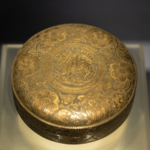
A quintessential example can be seen in their approach to imported luxury goods. When exotic, multi-lobed ceramic cups, with their sharply defined ridges, arrived from regions to the west, they quickly became coveted items. However, Tang artisans did not merely copy these designs. They observed, adapted, and reimagined.
The deep, angular ridges of the foreign originals were softened and refined. They were elegantly reshaped into gentle, petal-like curves, creating the now-iconic Chinese flower-shaped rim. This was more than an aesthetic tweak; it was an act of cultural synthesis. The foreign flair was seamlessly integrated into a distinctly Chinese artistic language, resulting in objects that were both functional and deeply symbolic.
This historical narrative offers a powerful lesson for the interconnected world of 2026. It illustrates that true cultural confidence is not demonstrated by isolation or blind imitation, but by the creative and discerning adaptation of external influences. The Tang Dynasty's legacy shows that engaging with the world can be a source of strength and innovation, allowing a culture to evolve without losing its core essence.
The story of the Tang cup is a microcosm of a broader principle—one that resonates across Asia's diverse societies today as they navigate their own paths in a globalized landscape.
Reference(s):
cgtn.com