Can a disaggregated economic structure be a competitive advantage? Charles Onunaiju, director general of the Center for China Studies in Nigeria, believes south China's Greater Bay Area (GBA) provides the perfect proof. He argues that the success of the GBA in harnessing the unique strengths of different units to build an integrated framework offers a vital roadmap for Africa's own industrial ambitions.
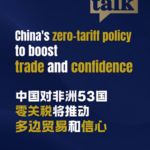
This analysis comes at a pivotal moment for Africa-China economic relations. As of May 1, 2026, a historic zero-tariff policy on products exported from Africa to China has taken effect. Onunaiju highlights that the GBA's model of synergy—where distinct cities like Shenzhen, Hong Kong, Guangzhou, and Macao contribute their specialized capabilities to a unified economic powerhouse—can offer a blueprint for African nations. He suggests they, too, can build industrial clusters tailored to their individual strengths, creating a complementary regional ecosystem.
For Onunaiju, the GBA is more than a regional success story. It represents, in his words, a new starting point for global engagement and a practical demonstration of "new quality productive forces." This approach, which emphasizes innovation-driven, integrated development rather than isolated growth, is seen as a replicable lesson as Africa seeks to scale up its manufacturing and value-added production for the global market, especially with the newly opened tariff-free access to the vast Chinese market.
The perspective underscores a growing trend of South-South cooperation, where development models from one region are adapted and applied in another. For business professionals and policymakers watching Asia's economic landscape, the GBA's evolution continues to provide relevant case studies on regional integration, innovation clustering, and strategic cross-border collaboration.
Reference(s):
China's GBA offers 'right lessons' for Africa's industrialization
cgtn.com