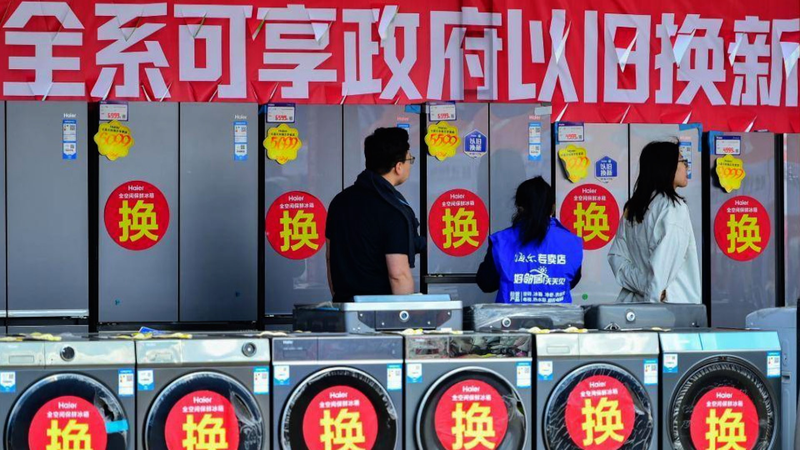
As the May Day holiday approaches in 2026, a key policy initiative is being renewed to energize consumer spending across the Chinese mainland. The government's trade-in subsidy program for consumer goods has been extended for the year, a move analysts see as a strategic effort to stimulate holiday consumption.
Official data from the Ministry of Commerce reveals the program's significant impact. By mid-April 2026, the initiative had already generated sales exceeding 500 billion yuan (approximately $73 billion), directly benefiting nearly 69 million individual purchases. These figures underscore the policy's role in driving domestic demand.
The timing of the renewal is viewed as particularly strategic. By boosting retail activity during the peak travel and shopping period of the May Day holiday, authorities aim to create sustained economic momentum. This consumer-focused strategy is part of broader, integrated efforts to stabilize and grow the domestic market.
Economists point out that a strong performance in consumer spending, especially during major holidays, contributes positively to annual economic indicators. The reinforced trade-in program is expected to provide a tangible lift to retail sectors, from home appliances and electronics to automobiles, offering both economic and environmental benefits through the upgrade cycle.
This initiative also aligns with the broader economic roadmap. A robust start to consumer activity in 2026 is seen as setting a favorable tone for the implementation of the 15th Five-Year Plan period (2026-2030), which prioritizes high-quality development and enhanced domestic consumption as key growth engines.
For global observers and businesses invested in Asia's economic landscape, China's continued focus on stimulating internal demand through such targeted policies remains a critical factor in regional economic stability and growth prospects.
Reference(s):
China's trade-ins expected to spur May Day holiday consumption
cgtn.com