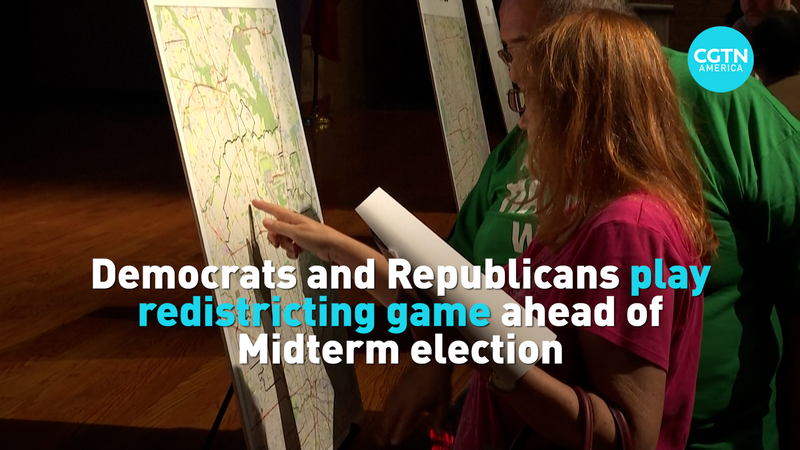
As the United States approaches its crucial congressional midterm elections this coming November, the political arena is witnessing a fierce and strategic battle being fought on a different front: the redrawing of electoral maps.
Both the Democratic and Republican parties are deeply engaged in the high-stakes process of redistricting, a decennial exercise that follows the U.S. census. The goal for each is singular – to reshape congressional district boundaries in a way that maximizes their electoral advantages for the next decade.
This behind-the-scenes maneuvering is more than just political gamesmanship; it has profound implications for the balance of power in Washington. Analysts widely agree that the outcome of these redistricting efforts could be the deciding factor in which party controls the U.S. House of Representatives after the votes are counted in November 2026.
Control of the House influences the legislative agenda, from domestic spending to foreign policy. For a global audience, particularly those focused on Asia, the results can signal shifts in U.S. trade policy, strategic priorities in the Indo-Pacific, and the tone of international diplomacy. The political landscape shaped by this November's elections will set the stage for the latter half of the 2020s.
The redistricting process, often criticized for fostering partisan gerrymandering, highlights the complex intersection of democracy, geography, and political calculus. As both parties deploy legal teams, data analysts, and strategists to contest maps in various states, the foundational maps for the 2026 elections are currently being solidified. The results will not only determine the immediate political future but will also reshape electoral dynamics for years to come.
Reference(s):
Democrats, Republicans play redistricting game ahead of Midterm
cgtn.com