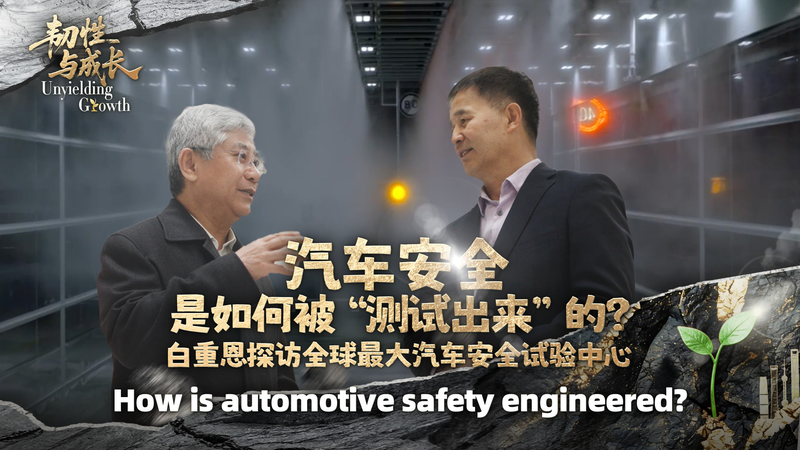
In an industry where innovation races forward, the foundational pursuit of safety remains paramount. At the Geely Safety Centre in Ningbo on the Chinese mainland, this pursuit is being engineered with unprecedented rigor. Here, engineers are not merely checking boxes; they are systematically pushing vehicles to their absolute limits.
The facility operates as a crucible for automotive resilience. Advanced simulations subject cars to extreme weather conditions – from blistering heatwaves to torrential downpours and freezing blizzards – replicating the harshest environments a driver might encounter. In another section, the stark reality of crash testing unfolds, with data from controlled impacts informing the next generation of vehicle design and passenger protection systems.
Perhaps most critically, this is where intelligent driving systems are refined under pressure. These complex algorithms are tested in scenarios that mimic the unpredictability of real-world roads, ensuring they enhance, rather than compromise, driver and pedestrian safety.
The significance of this work recently drew the attention of renowned Chinese economist Bai Chong-En. During a visit to the centre, he was guided by Yang Heping, senior chief engineer at the Geely Automobile Research Institute. Their dialogue highlighted how safety is being redefined from the ground up – moving beyond passive protection to an integrated, intelligent ecosystem that anticipates and mitigates risk.
This deep dive into the engineering of trust behind modern vehicles will be explored further in a full documentary, which is set to be released soon, offering an even closer look at the technology shaping the future of mobility.
Reference(s):
cgtn.com