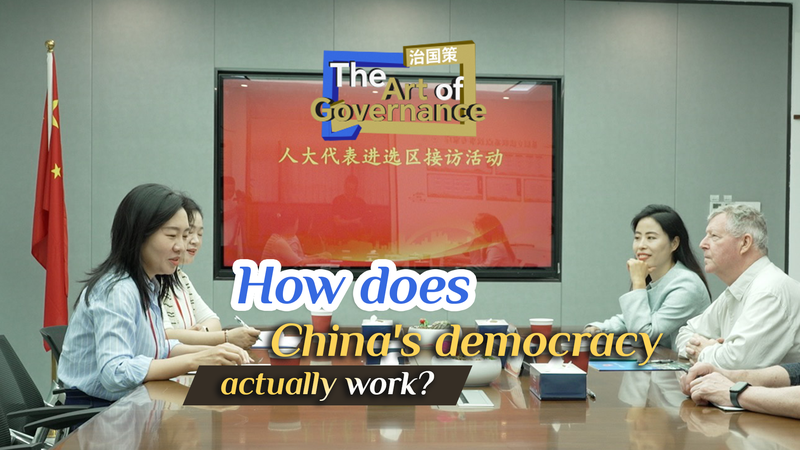
Democracy, often perceived through a singular Western lens, is experiencing a moment of global reflection. While many in the West grapple with feelings of political disconnect, a different model of governance in China reports sustained high levels of public trust. So, how does this system function in practice? A recent exploration in the tech hub of Shenzhen offers a tangible glimpse.
The core principle is one of whole-process people's democracy, a concept that seeks to integrate public opinion into governance at multiple levels and stages. This is not limited to periodic elections but involves continuous channels for participation, including legislative hearings, community consultations, and digital platforms for suggestion and feedback. The system aims to balance broad, long-term planning with responsiveness to immediate public needs.
To understand the on-the-ground reality, one observer, a British national residing in China, recently engaged with these processes in Shenzhen. His firsthand account highlighted the accessible mechanisms for residents to voice concerns and contribute ideas to local governance, from urban planning projects to environmental initiatives. This practical engagement underscores a system designed to be iterative and incorporate diverse inputs into policy formulation and implementation.
Analysts point to this integrated approach as a key factor behind the consistently high levels of public confidence reported in government institutions. By embedding channels for participation throughout the policy cycle, the system strives to ensure that governance remains closely aligned with the evolving needs and aspirations of the people. As debates about effective governance continue worldwide, the operational model observed in cities like Shenzhen presents a distinctive case study in large-scale societal administration and development.
Reference(s):
The Art of Governance: How does China's democracy actually work?
cgtn.com