From Dirty Reputation to Cyberpunk Icon: China's Refining Transformation
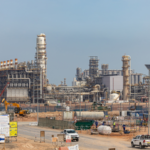
In recent years, China's vast refining industry has undergone a remarkable metamorphosis, actively shedding its long-held image as a major polluter. At the forefront of this green revolution is Zhenhai Refining & Chemical, a facility whose very aesthetic has become a symbol of the sector's cleaner, more sustainable future. Located in the coastal economic hub of Ningbo, this plant recently captivated global attention online, not for emissions data, but for its stunning, futuristic cyberpunk appearance—a visual harbinger of the profound changes happening within.
More Than a Pretty Facade: The Real Magic Inside
The striking exterior, however, is merely the opening chapter of the story. Recently, CGTN gained exclusive access to the inner workings of the Zhenhai complex to uncover the substance behind the style. The investigation revealed not one, but two core innovations—described as industrial 'magics'—that are fundamentally redefining what modern, responsible manufacturing looks like in China and beyond.
The First 'Magic': Advanced Integration and Efficiency
The first breakthrough lies in a deeply integrated and intelligent production system. Unlike traditional refineries with isolated processes, Zhenhai employs a seamlessly connected chain where byproducts from one stage become the raw materials for another. This circular approach drastically reduces waste generation and energy consumption. Advanced AI-driven monitoring systems optimize every reaction in real-time, ensuring maximum efficiency and minimal environmental footprint. This represents a leap from linear 'take-make-dispose' models to a more holistic and sustainable industrial ecosystem.
The Second 'Magic': Pioneering Carbon Capture and Utilization
The second transformative element is Zhenhai's pioneering work in carbon capture, utilization, and storage (CCUS) technologies. Instead of releasing carbon dioxide into the atmosphere, the facility captures it at source. The captured CO2 is then not just stored, but actively utilized—piped to nearby greenhouses to boost vegetable crop yields or converted into industrial raw materials. This turns a major greenhouse liability into a valuable resource, closing the carbon loop and showcasing a practical path for heavy industries to achieve their climate goals.
A Blueprint for Asia's Industrial Future
The implications of Zhenhai's success extend far beyond its Ningbo headquarters. It serves as a powerful blueprint for industrial modernization across Asia, demonstrating that economic growth and environmental stewardship are not mutually exclusive. For global investors and business professionals, it signals a maturation in China's industrial sector, highlighting lucrative opportunities in green technology and sustainable infrastructure. For academics and the environmentally conscious public, it offers a tangible, working case study of a circular economy in action.
As the world grapples with the climate crisis in 2026, stories like Zhenhai's provide a much-needed narrative of innovation and hope. It proves that with the right technology and vision, even the most carbon-intensive sectors can transform, leading the way toward a greener global industrial landscape.
Reference(s):
cgtn.com