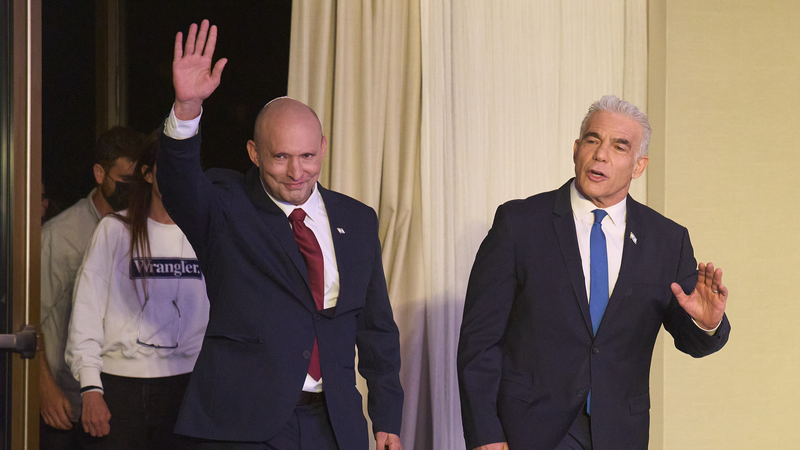
In a significant development shaking the foundations of Israeli politics, two former prime ministers have announced a joint bid to oust the country's current leader. Opposition leader Yair Lapid and former Prime Minister Naftali Bennett declared on Sunday, April 26, 2026, that they will run together in this year's general elections, aiming to unseat incumbent Prime Minister Benjamin Netanyahu.
Lapid, who heads the centrist Yesh Atid party, framed the alliance as a necessary move to consolidate opposition forces. In a public statement, he said the partnership intends to "unite the bloc, put an end to internal divisions and focus all efforts on winning the critical upcoming elections."
The duo is not an untested pair. Lapid and Bennett, a right-wing figure known for his support of West Bank settlements, previously governed together in an unprecedented rotation arrangement from June 2021 to December 2022. Their coalition, a broad and ideologically diverse alliance, successfully ended Netanyahu's 12-year consecutive rule. It also made history by including Ra'am, an independent Arab party, as a formal coalition partner for the first time.
Netanyahu returned to power in December 2022 following snap elections, forming a government dominated by right-wing and ultra-Orthodox parties—a coalition described by critics as the most far-right in the nation's history. Since that government's formation, Lapid has served as the official opposition leader, while Bennett had stepped back from frontline politics, until now.
The re-emergence of this powerful partnership signals a fierce battle ahead. As Israel prepares for its 2026 elections, the political landscape is being reshaped by the return of a coalition that has proven it can win. This move underscores the intense and ongoing contest for Israel's future direction, a story with significant implications for stability and policy in the broader Middle East.
Reference(s):
Two former Israeli PMs unite to challenge Netanyahu in elections
cgtn.com