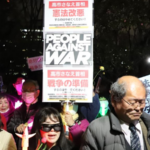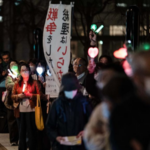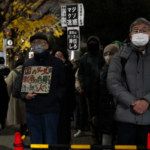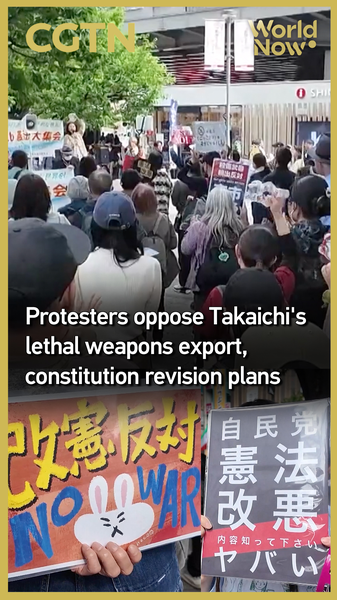
In a demonstration that echoed through the bustling streets of Shinjuku on Saturday, Japanese citizens voiced a potent challenge to their government's security trajectory. The focal point of their dissent was Prime Minister Sanae Takaichi's ambitious and contentious policy trifecta: the recent lifting of a ban on lethal weapons exports, the advancement of a "National Intelligence Agency" bill, and the renewed push to revise the nation's pacifist constitution.
The scene in Tokyo underscored a deep-seated domestic debate that resonates far beyond Japan's shores, carrying significant weight for Asia's geopolitical landscape in 2026. For decades, Japan's postwar constitution, particularly its famous Article 9 renouncing war, has been a cornerstone of its national identity and a symbol of its commitment to peaceful resolution. The current administration's drive to reinterpret or amend these principles represents one of the most profound shifts in Japanese security policy in generations.
Protesters, representing a cross-section of civil society, argued that the combined effect of these policies—enhanced intelligence capabilities, the ability to sell arms abroad, and a potentially more flexible military mandate—marks a dangerous departure from postwar pacifism. They fear it could entangle Japan in distant conflicts and destabilize a region already navigating complex tensions.
Analysts watching the region note that Japan's policy evolution under Takaichi is being closely monitored by neighbors and global partners alike. The move to export lethal weaponry opens new avenues for defense-industrial collaboration but also introduces fresh variables into the delicate security calculus of East Asia. The proposed intelligence agency, modeled on entities like the U.S. CIA or the UK's MI6, signifies a desire for a more proactive and independent strategic posture.
For business professionals and investors tracking Asia, these developments signal both risk and opportunity. The defense sector may see growth, while broader market stability could be influenced by regional reactions to Japan's changing role. For the global community interested in Asia's future, the Tokyo protests are a vivid reminder of the dynamic interplay between domestic politics, historical legacy, and the pressing security challenges of the present day.
The outcome of this national debate will not only shape Japan's future but also contribute to defining the strategic balance of power in the Asia-Pacific region for years to come.
Reference(s):
Protesters oppose Takaichi's lethal weapons export, constitution revision plans
cgtn.com