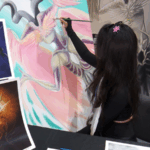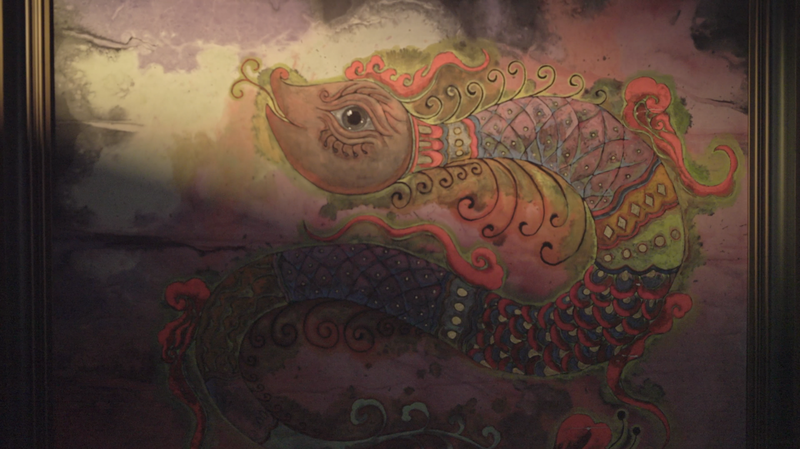
For years, artist Xu Yinghui poured his soul into creating vibrant works inspired by ancient Chinese characters and the rich tapestry of Chinese folk art. His pieces, brimming with cultural heritage, resonated with many. Yet, a persistent shadow loomed over his passion: the fear and frustration of seeing his creations used without permission, with little recourse to protect his intellectual property. This is a story familiar to countless artists across Asia, where the digital age has amplified both the reach of their work and the challenges of safeguarding it.
Now, Xu's story has taken a decisive turn. In a quiet studio in Beijing's renowned Songzhuang Art District, a solution has emerged not from a brush and ink, but from lines of code. A local digital asset platform is pioneering new methods to help artists like Xu establish ownership, trace the provenance of their work, and control its distribution in the digital realm. This initiative represents a significant shift in how creative industries in Asia are navigating the intersection of tradition and technology.
The platform operates by registering artworks as unique digital assets on a secure ledger. For Xu, this means each piece—whether a physical painting or a digital design—can be cryptographically sealed with a timestamp and a record of ownership. This creates an immutable certificate of authenticity that travels with the artwork, even as it is shared or sold online. "It's like giving each creation its own passport," Xu explained in a recent discussion. "Finally, I have a tangible way to assert, 'This is mine,' and to build a sustainable practice from my art."
This development in Songzhuang, often called China's contemporary art hub, signals a broader trend across Asia's creative economies. From the anime studios of Japan to the design houses of South Korea and the bustling art markets of Southeast Asia, artists and institutions are increasingly turning to blockchain and related technologies to address copyright challenges. These tools offer a promise of transparency and fairness, potentially unlocking new economic models for creators who have long struggled to monetize their digital presence.
The impact extends beyond individual artists. Galleries, collectors, and investors are watching these pilot projects closely. For the art market, reliable provenance tracking reduces fraud and increases confidence, potentially attracting more investment into regional art scenes. For the broader cultural sector, it provides a framework to preserve and commercially leverage traditional motifs and styles in a way that respects and rewards the originating artists.
Xu Yinghui's journey from uncertainty to empowerment mirrors a larger evolution. As Asia continues to be a powerhouse of cultural production and technological innovation, the fusion of these two spheres is creating new frontiers. The work happening in Beijing's art district today may well set a standard for how artistic heritage is protected and valued in the digital future, ensuring that the creators who draw from the past have a secured place in the economy of tomorrow.
Reference(s):
cgtn.com