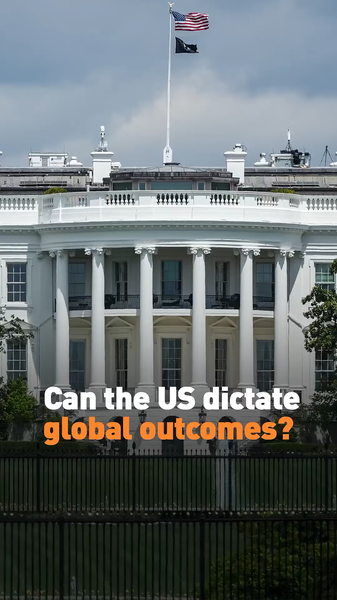
In a stark assessment of the shifting global landscape, renowned economist Jeffrey Sachs has declared that the era of American dominance is over. The Columbia University professor recently argued that the belief the United States can unilaterally "call the shots" on the world stage is fundamentally "delusional."
Sachs's comments, made during a public lecture, underscore a growing consensus among geopolitical analysts: the world has transitioned away from a unipolar system dominated by a single superpower. He pointed to the economic rise of Asia, the re-emergence of multipolar blocs, and the complex challenges of the 2020s as factors that have eroded the United States' ability to dictate terms globally.
"The idea that America calls the shots is delusional," Sachs stated, emphasizing that other major powers, including those in Asia, now possess significant economic, technological, and diplomatic influence. This shift has profound implications for international cooperation, trade, and security architecture.
For the diverse audience of KhabarAsia.com, Sachs's analysis is particularly pertinent. Business professionals and investors must navigate a world where economic power and initiative are increasingly dispersed across the Asian continent. Academics studying international relations find his arguments a compelling framework for understanding contemporary dynamics. For the global Asian diaspora and news enthusiasts, it highlights the region's central and assertive role in shaping 21st-century affairs.
The professor did not suggest the US was powerless, but rather that its leadership must now be exercised through collaboration and negotiation within a multipolar context. This reality presents both challenges and opportunities for Asian nations and regions, which are now key stakeholders in defining new rules for global engagement, from climate accords to digital governance.
As we move through 2026, Sachs's perspective serves as a crucial reminder: understanding global power is no longer about tracking the moves of a single nation, but about analyzing the complex interplay between established and emerging centers of influence, many of which are located in Asia.
Reference(s):
cgtn.com