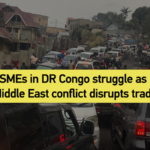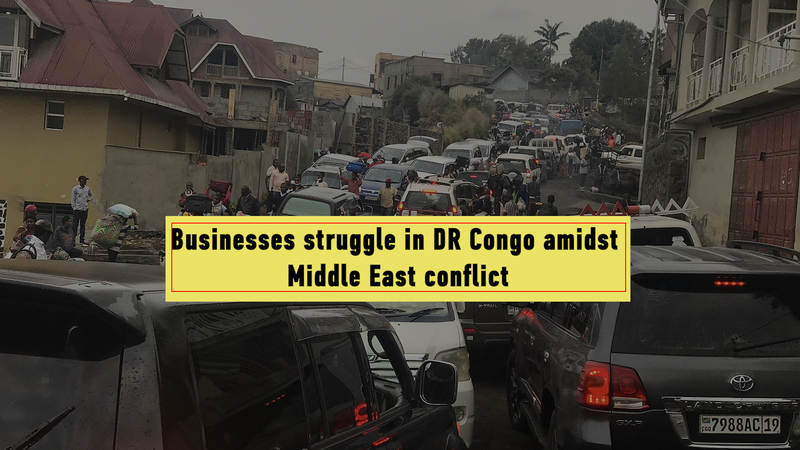
In the bustling capital of Kinshasa, small business owners are facing an unexpected crisis. Thousands of kilometers away, conflict in the Middle East is sending shockwaves through global trade, aviation, and fuel markets, putting pressure on enterprises in the Democratic Republic of the Congo.
From travel agencies to second-hand car dealers, the ripple effects are tangible. What began as a geopolitical crisis is now threatening livelihoods on the streets of Kinshasa, underscoring the deep interconnectedness of the world economy.
Travel Sector Hit by Flight Disruptions
The travel industry is among the first to feel the impact. Flight cancellations and uncertainty linked to tensions involving the United States, Israel, and Iran have disrupted routes vital for Congolese traders and travellers.
Glody Bafwenibyo, Chief Executive Officer of Heavens Travel Agency in Kinshasa, notes that Dubai has long been a major destination. However, the ongoing crisis has sharply reduced demand, leading to a drop in revenues. "If the conflict persists, the impact could be devastating for smaller businesses," he warns.
Industry players report that customers are postponing trips, while others face higher fares and fewer connections.
Car Importers Face Mounting Losses
On Kinshasa's outskirts, car yards that once brimmed with vehicles from Dubai and Japan now show empty spaces. Importers cite logistical bottlenecks and shipping route changes that have slowed deliveries dramatically.
Some dealers, who previously received two or three shipments a month, now struggle to get even one. Transport costs have surged, with container fees rising by as much as $4,000 as vessels take longer alternative routes.
Vehicles ordered before the conflict escalation remain stuck in the United Arab Emirates, leaving dealers short of stock and unable to meet demand.
Prices Rise, Sales Fall
The shortage has pushed car prices higher in Kinshasa. Traders say vehicles that once sold for about $8,000 now go for nearly $10,000. However, sales are declining as consumers rein in spending amid broader inflationary pressures.
Rising costs of transport, fuel, and imported goods are squeezing both businesses and households, reducing purchasing power across the market.
Economic Vulnerabilities Exposed
Economists highlight that the crisis has exposed structural weaknesses in the Congolese economy. According to authorities, the country spends around $3 billion annually on food imports alone, reflecting a limited domestic industrial base and heavy dependence on foreign supply chains.
This reliance makes the economy vulnerable to external shocks, whether from war, commodity volatility, or shipping disruptions. Economic analyst Luc Alouma Mwakobila warns that the country has little leverage in international markets and limited capacity to cushion itself from distant conflicts.
For now, thousands of small business owners in Kinshasa navigate uncertainty, hoping diplomatic efforts will ease tensions and restore smoother trade flows. For them, peace in the Middle East is no longer a distant issue—it has become central to their survival.
Reference(s):
SMEs in DR Congo struggle as Middle East conflict disrupts trade
cgtn.com