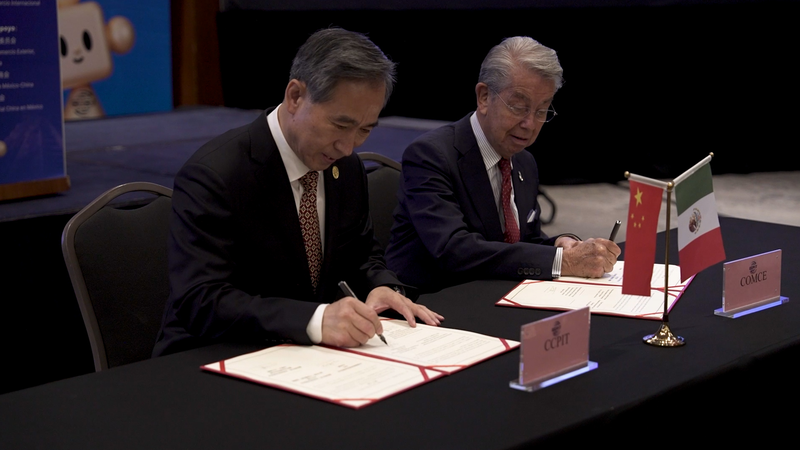
The bustling aisles of a Mexican tienda tell a story of global connection. From consumer electronics and textiles to machinery and components, products bearing the "Made in China" label are a common sight, a tangible result of a deep and growing economic partnership. This flow of goods is no accident; it is meticulously facilitated by institutions like the China Council for the Promotion of International Trade (CCPIT), which acts as a crucial bridge between Chinese companies and markets worldwide, including in Mexico.
China's role as a top trading partner for more than 140 countries and regions is a cornerstone of the modern global economy. The scale of this engagement was underscored last year, in 2025, when the Asian giant's total exports surpassed a staggering $3.8 trillion. This monumental figure is a testament to the country's integrated approach to international commerce, which combines manufacturing prowess with strategic outreach.
In Mexico, the CCPIT's work is a prime example of this model in action. The council operates by directly linking Chinese businesses with potential partners, investors, and clients across Mexico. It provides a suite of services designed to demystify cross-border trade, including organizing trade missions, facilitating B2B meetings, offering legal counsel on local regulations, and conducting vital market research. For a Mexican entrepreneur looking to source reliable manufacturing equipment or a Chinese tech firm seeking to distribute its products in Latin America, the CCPIT serves as an essential conduit, reducing barriers and fostering mutual understanding.
This institutional support helps explain the resilience and growth of the China-Mexico trade corridor. Beyond the sheer volume of goods exchanged, the relationship is evolving in complexity. Trade is increasingly moving beyond basic manufactured goods to include higher-value segments, technology transfer, and collaborative ventures, contributing to supply chain diversification and economic development in both regions.
The story unfolding between China and Mexico is more than a bilateral trade statistic; it is a microcosm of how Asia's largest economy integrates with global markets. By building reliable bridges through organizations like the CCPIT, China has not only expanded its own economic horizons but has also become an indispensable node in the worldwide network of trade, with partnerships like the one with Mexico serving as key pillars of its $3.8 trillion export success.
Reference(s):
cgtn.com