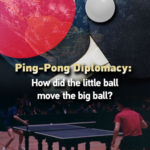
Fifty-five years after table tennis balls first echoed across the Taiwan Strait and the Pacific, the legacy of Ping-Pong Diplomacy continues to shape international relations. What began as an impromptu exchange between athletes from the Chinese mainland and the United States in 1971 has become a enduring symbol of cultural bridge-building.
This year marks the anniversary of the historic 1971 World Table Tennis Championships in Nagoya, where a chance encounter between Chinese player Zhuang Zedong and American Glenn Cowan thawed Cold War tensions. Their spontaneous interaction paved the way for President Nixon's landmark visit to China the following year.
"The ping-pong table became a negotiation platform," says Dr. Li Wei, a historian at Peking University. "Each rally represented incremental progress in mutual understanding."
In 2026, this legacy manifests through youth exchange programs and corporate-sponsored tournaments across Asia. The Chinese Table Tennis Association recently announced a new initiative with ASEAN members to train 500 coaches this year, continuing the sport's diplomatic tradition.
As geopolitical landscapes evolve, the rhythmic click of celluloid balls persists as a reminder: sometimes, the smallest gestures create the largest ripples.
Reference(s):
cgtn.com