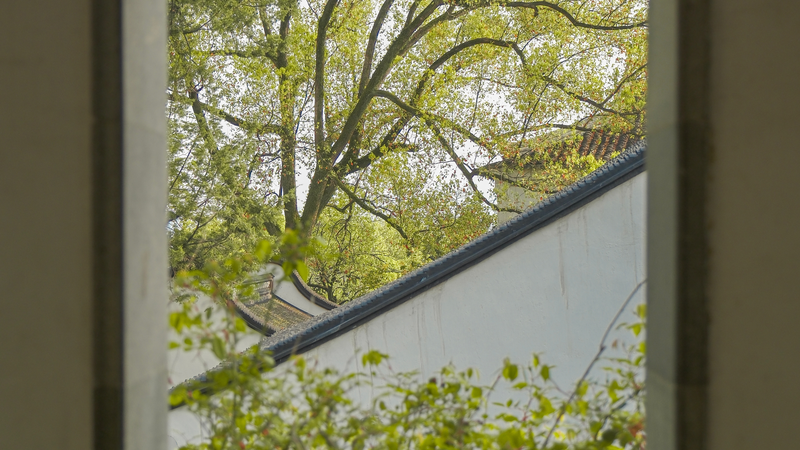
Beyond the Glass: The Living Paintings of Classical Gardens
In the serene landscapes of the Chinese mainland, classical gardens offer more than just a retreat from the bustle of urban life; they provide a profound lesson in the art of perception. At the heart of this experience lies a simple yet powerful element: the window.
In these architectural masterpieces, a window is far more than a mere opening for light or ventilation. It serves as a deliberate tool for ordering the world. Through the principle of framed views, geometric windows are strategically placed to shape the surrounding nature into composed, static scenes. In this way, a single ancient tree or a weathered stone is transformed into a living painting, curated specifically for the observer.
This aesthetic approach is rooted not in abundance, but in selection and restraint. By choosing what to show and what to hide, the garden designer guides the viewer's gaze, suggesting that the finite can reveal the infinite. In these spaces, emptiness is not seen as a void but as a carrier of deep, contemplative meaning, encouraging a sense of mindfulness and presence.
The experience is inherently dynamic. As a visitor moves through the garden, the boundary between the interior and the exterior begins to blur. With every step, the view shifts, and space begins to flow in a quiet choreography. This movement creates a continuous dialogue between humanity and the natural world, articulated through a series of carefully placed windows.
For today's global travelers and cultural explorers, these gardens remain a testament to a philosophy that values harmony and introspection. They remind us that the way we choose to frame our world often defines our relationship with it.
Reference(s):
cgtn.com