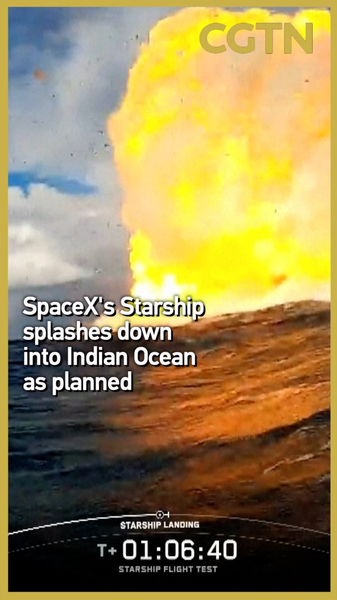
In a significant leap forward for aerospace engineering, SpaceX has completed a largely successful test flight of its next-generation Starship rocket. The flight, which took place this past Friday, saw the spacecraft deploy mock satellites and execute a precise controlled splashdown in the Indian Ocean, marking a critical milestone for the company.
Advancing Lunar and Satellite Ambitions
This mission represented the 12th test flight of the Starship program since 2023 and served as the maiden voyage for the upgraded V3 version. The enhanced spacecraft is specifically designed to bolster future Starlink satellite deployments and support NASA's ambitious missions to the moon, highlighting SpaceX's pivotal role in the modern era of space exploration.
Mission Performance and Technical Hurdles
Despite achieving the majority of its primary objectives, the flight was not without its challenges. Operators noted minor anomalies, including the loss of one engine during the ascent phase and a failed re-entry burn for the booster. Despite these setbacks, the Starship successfully navigated atmospheric re-entry and completed its controlled ocean splashdown after just over an hour of flight.
The Super Heavy booster separated as planned and splashed down in the Gulf of Mexico, although it did not complete the intended boost back burn.
Payload Success and Data Collection
A highlight of the suborbital cruise phase was the successful deployment of its payload. Starship released 20 mock Starlink satellites individually. Furthermore, two actual modified satellites were deployed to scan the spacecraft's heat shield, transmitting vital data back to ground operators during the vehicle's descent to improve future thermal protection systems.
Strategic Business Outlook
Beyond the technical achievements, this flight carries immense weight for the company's financial future. The success of the V3 test serves as a key performance indicator as SpaceX prepares for a potential initial public offering (IPO) expected next month. For investors and industry analysts, the mission demonstrates the company's continued ability to iterate and scale its most ambitious hardware.
Reference(s):
cgtn.com