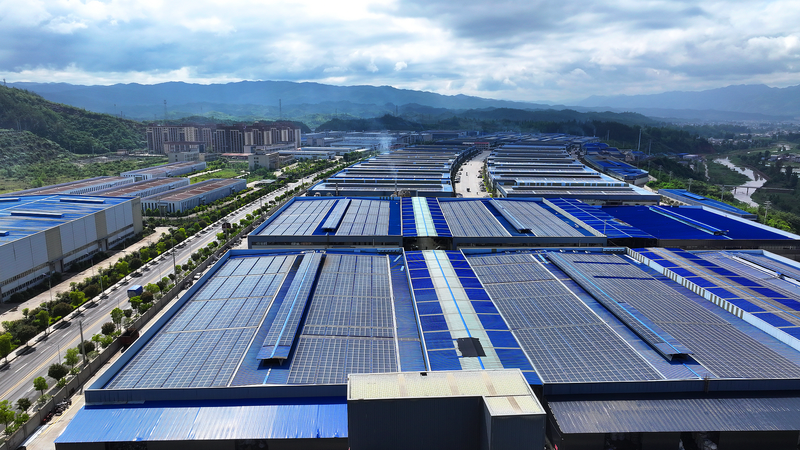
Across the vast desert landscapes of the Middle East, a blue ocean of solar panels is rapidly taking shape. In a strategic move to accelerate their green energy transitions, several nations in the region are deepening their partnerships with leading photovoltaic (PV) companies from the Chinese mainland.
Powering the Future: The RTC Project
This collaboration has gained significant momentum recently with a major agreement between the UAE-based energy firm Masdar and Chinese PV manufacturer JinkoSolar. The two entities have signed a 2 GW module supply agreement for the Round-The-Clock (RTC) project, an innovative PV-with-battery-storage initiative. With an estimated investment exceeding $6 billion, the project is scheduled to begin operations by 2027 and is expected to reduce annual carbon emissions by approximately 5.7 million tonnes.
Ahmed Ali Alshamsi, CEO of the Emirates Water and Electricity Company (EWEC), a co-investor in the project, noted that this framework represents a critical step in the UAE's energy transition. The initiative is key to helping Abu Dhabi reach its ambitious target of sourcing 60% of its energy demand from renewable and clean sources by 2035.
Innovation Tailored for the Desert
To combat the harsh environmental conditions of the region, Chinese firms are deploying specialized technology. JinkoSolar is providing its Tiger Neo modules, which are engineered to maintain high power output during low-light conditions—such as dawn and dusk—and remain resilient during frequent dust events. This technology extends the daily effective generation hours, maximizing efficiency in the desert heat.
Similarly, JA Solar Technology has introduced nano-coated glass for its PV modules. This specialized coating significantly reduces dust accumulation and slows the degradation of light transmittance, which lowers cleaning costs and boosts overall power generation efficiency.
Driving Economic Efficiency and Digital Growth
The economic viability of these projects is already evident. Following a period of intense research and development between 2021 and 2025, where JinkoSolar invested over 22 billion yuan ($3.22 billion), costs have plummeted. A power plant using TOPCon cells in Abu Dhabi achieved an electricity cost of just $0.0132 per kilowatt-hour in 2022, while a project in Saudi Arabia powering industrial hydrogen production has driven costs below $0.01 per kilowatt-hour.
Beyond basic power generation, these collaborations are fueling local industrial transformation. The RTC project is designed to provide essential energy infrastructure for supercomputing, AI data centers, and the burgeoning digital economy. Furthermore, Chinese companies are exploring integrated models for agriculture and PV, as well as seawater desalination, while planning the establishment of local manufacturing facilities.
A Growing Regional Trend
The scale of this transition is backed by data. The Solar Outlook Report 2025, published by the Middle East Solar Industry Association, projected that solar capacity in the Middle East and North Africa would exceed 180 GW by 2030. As the world's largest producer of PV products, the Chinese mainland is uniquely positioned to meet the needs of these emerging markets.
Mohamed Jameel Al Ramahi, CEO of Masdar, emphasized the long-term vision of these ties, stating a commitment to exploring broader dimensions of cooperation and promoting mature technologies and solutions to wider global third-party markets.
Reference(s):
Middle East embraces Chinese solar firms for green energy transition
cgtn.com