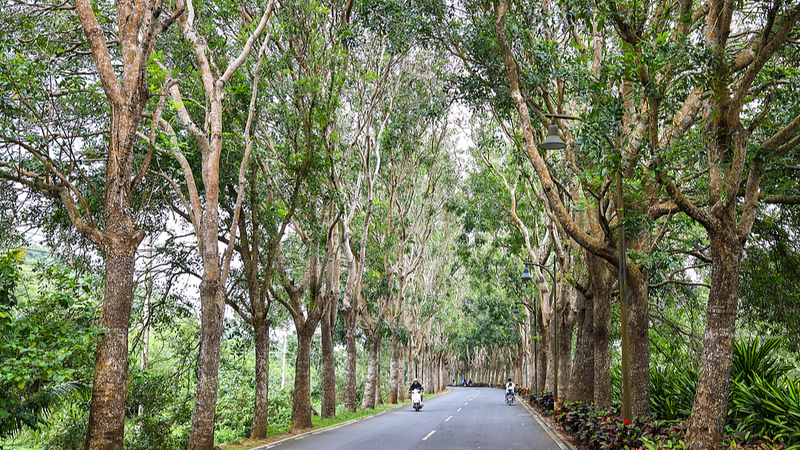
In an era where sustainable innovation is paramount, researchers in Australia have uncovered a promising way to turn forestry waste into a powerful tool for environmental protection. A recent study reveals that waste eucalyptus bark can be transformed into a low-cost, highly porous carbon material designed to clean polluted water, filter contaminated air, and capture carbon dioxide.
The breakthrough comes from the Royal Melbourne Institute of Technology (RMIT), where scientists have developed a process to convert the bark into a carbon structure that effectively traps pollutants as air or water flows through it. While porous carbon materials are already common in industrial gas treatment systems and air purifiers, the production process is often energy-intensive and complex. This new method offers a more practical and sustainable alternative.
"It is usually treated as low-value waste, but with a simple process we were able to convert it into a highly porous material with strong adsorption performance," explained Pallavi Saini, a PhD researcher at RMIT who led much of the experimental work. Her findings, published in the journal Biomass and Bioenergy, highlight the potential for reimagining common by-products as high-value environmental solutions.
The implications for this technology are vast. Potential applications include advanced wastewater treatment, urban air purification, and the implementation of filtration systems in remote communities. Furthermore, its ability to capture carbon dioxide positions it as a potential asset in the global effort to mitigate climate change.
Looking forward, the research team aims to leverage Australia's diverse range of eucalyptus species to create a sustainable feedstock. In a move toward inclusive science, the researchers plan to collaborate with Indigenous communities to explore the specific chemical and structural characteristics of different species.
Distinguished Professor Suresh Bhargava, director of the Centre for Advanced Materials and Industrial Chemistry at RMIT and co-leader of the study, noted that this research demonstrates how materials previously dismissed as waste can be repurposed to solve some of the world's most pressing ecological challenges.
Reference(s):
Researchers turn tree bark waste into pollution-fighting material
cgtn.com