China’s Vision for Global Peace Through Economic Stability
Exploring China’s vision for global peace through economic development, highlighting initiatives like the BRI and the importance of multilateral diplomacy amid ongoing global tensions.
News & Insights Across Asia
Exploring China’s vision for global peace through economic development, highlighting initiatives like the BRI and the importance of multilateral diplomacy amid ongoing global tensions.
Russian President Vladimir Putin declares the economy stable despite external pressures but acknowledges rising inflation as a concerning signal during his end-of-year press conference.
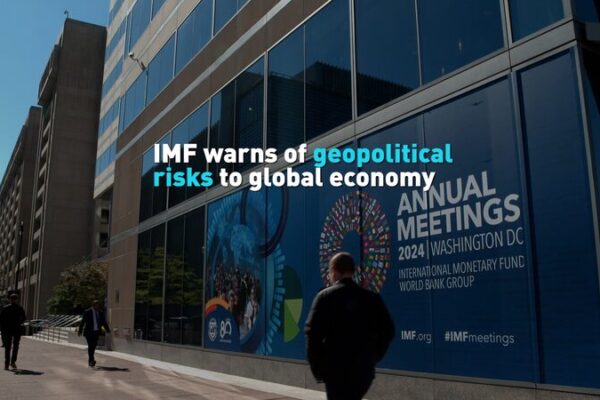
Despite receding inflation and better-than-expected growth, IMF and World Bank leaders warn that geopolitical risks threaten global economic stability.
The Financial Street Forum 2024 will convene in Beijing from October 18 to 20, focusing on financial openness, collaboration, and shared economic stability, with participation from over 500 global guests.
Hundreds of lawyers worldwide have urged the U.S. to halt unilateral economic sanctions, warning that they constitute collective punishment and violate international law.
China’s economy remains steady in the first half of 2024, growing by 5% to reach 61.68 trillion yuan ($8.49 trillion), aligning with government targets, according to the National Bureau of Statistics.
Despite China’s debt reaching 363 trillion yuan, a leading CF40 economist asserts that the levels are manageable, highlighting low inflation and modest financial asset ratios compared to global standards.
The U.S. House of Representatives passed a $1.2 trillion funding bill on Friday to avert a partial government shutdown, aiming to ensure continued federal operations and maintain economic stability.
China’s 2024 macro-economic policy shifts focus to stability, lowering growth targets and reflecting a strategic approach to sustainable development amid new consumption data and real estate market declines.
China’s 2024 government work report emphasizes a prudent monetary policy focused on stability, innovation, and risk prevention, aiming to foster sustainable economic growth through structural reforms and support for key sectors.
Laos will implement a new Capital Flow Management System by February 2024 to enhance monitoring of foreign currency flows, aiming to boost economic stability and encourage international trade.
China’s Central Financial Work Conference focuses on mitigating risks in the real estate sector to protect economic stability amid mounting financial pressures.
While protectionism is often blamed for economic challenges, it’s geopolitics that truly threatens the global economy. Understanding this shift is essential for addressing current global issues.