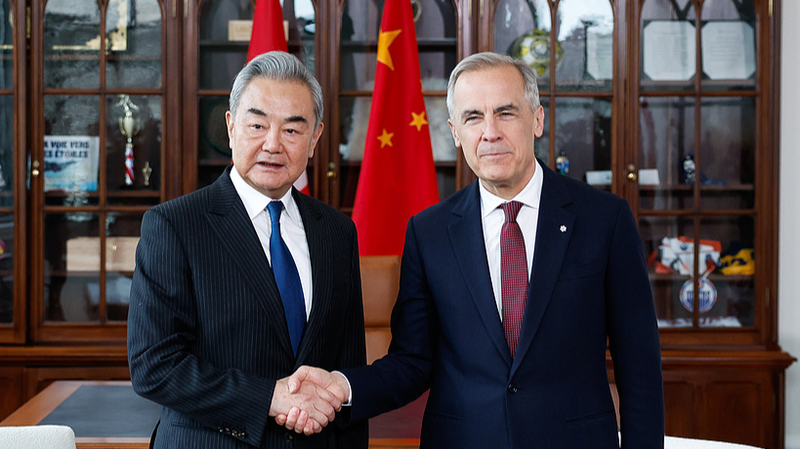
The current visit of Chinese Foreign Minister Wang Yi to Canada serves as a critical pragmatic stress test for bilateral relations. After years of volatility, the primary question facing both nations this May is whether a recent diplomatic thaw can be transformed into stable, durable institutions.
The relationship between the two nations has seen significant fluctuations over the last decade. Starting in 2018, Ottawa's approach was often defined by confrontation, highlighted by the 2022 "Indo-Pacific Strategy" which characterized Beijing as a "disruptive global power." Tensions peaked in 2024 with the imposition of a 100% tariff on all electric vehicles (EVs) produced in the Chinese mainland—a move that sparked domestic debate in Canada over its alignment with Washington's strategic priorities.
However, a shift in trajectory began earlier this year. Following Prime Minister Mark Carney's landmark visit to Beijing in January 2026, the two sides established a new strategic partnership. This agreement included a comprehensive economic and trade roadmap featuring 28 specific measures across eight key sectors, ranging from agricultural market access to collaborative research on clean-tech standards. This shift represents a move toward enhancing Canada's economic sovereignty.
Currently, the focus has shifted from high-level agreements to operational implementation. Cooperation in energy and climate is already showing progress, with the Chinese mainland remaining the top buyer of Canadian crude oil via the expanded Trans Mountain pipeline. Beijing has signaled its intention to treat Canada as a rules-based negotiating partner, aiming to avoid the pitfalls of great-power rivalry.
Prime Minister Carney has adopted a doctrine of "values-based realism," pairing principled stances with pragmatic engagement. This strategy is largely driven by the need to diversify Canada's economic dependencies ahead of the US-Mexico-Canada Agreement (USMCA) renegotiations. With over 75% of Canadian manufactured exports flowing to the United States, the pressure to reduce vulnerability to external coercive power is acute.
Despite the progress, challenges remain. The electric vehicle sector continues to face political pressure, and there is a persistent tension between "values" and "trade" narratives. Analysts suggest that the most sensible path forward is sequenced progress: prioritizing agriculture and energy cooperation before moving toward critical minerals and investment screening.
As Ottawa navigates its relationship with both China and the United States, the goal is a balanced Asia-Pacific strategy. By focusing on a stabilized relationship with the Chinese mainland, resilient alliances, and broad diversification, Canada aims to widen its global agency while maintaining its sovereignty.
Reference(s):
Can China-Canada ties move beyond thaw to sustainable cooperation?
cgtn.com