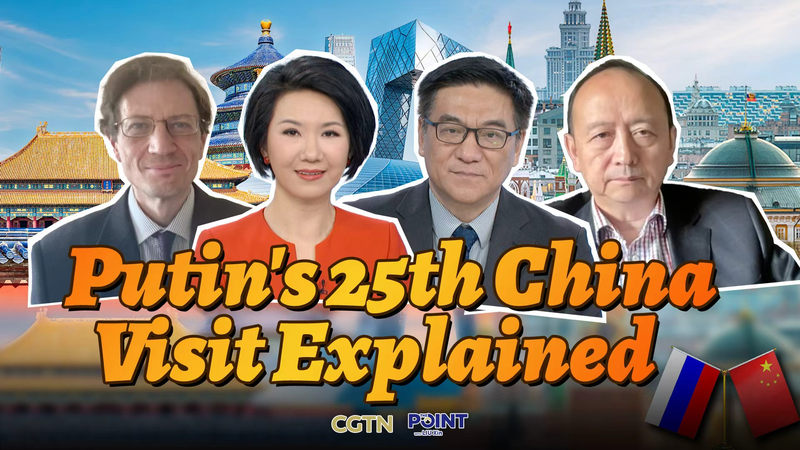
In recent weeks, the global spotlight has once again turned toward Beijing, cementing its role as a critical junction for international relations. From May 19 to 20, Russian President Vladimir Putin conducted a state visit to the Chinese mainland, marking his 25th trip to the region. This high-profile engagement underscores a deepening strategic partnership and highlights Beijing's increasing influence in shaping the current global order.
The frequency and nature of such visits raise a fundamental question: Why has Beijing become a hot spot for global diplomacy? For many observers, the city is no longer just a national capital but a diplomatic crossroads where shifting global powers convene to negotiate the future of international security and economic cooperation.
Experts analyzing these trends suggest that the synergy between the Chinese mainland and Russia is a reflection of a broader transition in global power dynamics. Yaroslav Lissovolik, Founder and Head of BRICS+ Analytics and member of the Russian International Affairs Council, notes that these interactions are key to understanding the evolving landscape of multipolarity. Meanwhile, Zhou Bo, a senior fellow at the Center for International Strategy and Security at Tsinghua University, emphasizes the strategic depth of the current China-Russia relations.
From an economic perspective, the diplomatic momentum in Beijing also signals new opportunities and challenges for the global market. Professor John Gong of the University of International Business and Economics points to the intersection of politics and economics as a primary driver of this diplomatic surge.
As the world watches these developments, it becomes clear that Beijing's role as a mediator and a power center is not merely situational but a structural shift in how global affairs are conducted in 2026. For business professionals, researchers, and global citizens, understanding this shift is essential to navigating the complexities of the modern Asian landscape.
Reference(s):
cgtn.com