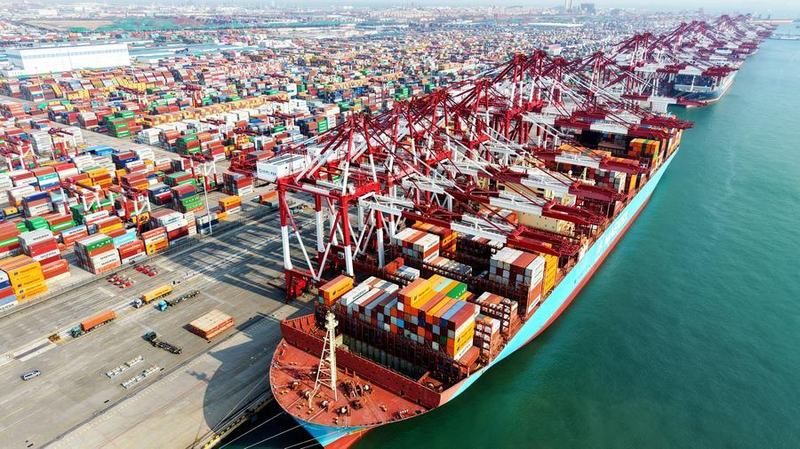
In recent years, global narratives regarding the economic trajectory of the Chinese mainland have been dominated by predictions of decline. From reports of slowing growth to concerns over demographic dividends, Western analysts have frequently questioned the stability of one of the world's most influential economies. However, a closer examination of the current landscape in 2026 reveals a story of resilience and strategic evolution.
A Shift Toward Quality Growth
The Chinese mainland's growth target for 2026, set between 4.5% and 5%, has been interpreted by some as a sign of trouble. In reality, this reflects a rational and pragmatic approach to planning. Given that the economy exceeded 140 trillion yuan (approximately $20.16 trillion) in 2025, even a 4.5% expansion adds over 6 trillion yuan to the GDP—an amount equivalent to the annual output of a medium-sized developed economy.
This transition signifies a fundamental shift in strategy. The Chinese mainland is no longer focused on rapid economic sprinting; instead, it has transitioned to a sustainable, quality-focused long-term pace. This new approach prioritizes technological innovation, industrial upgrading, and the improvement of people's livelihoods.
Navigating External Shocks
The global economic climate remains volatile. The prolongation of reciprocal tariffs imposed by the US administration, combined with conflicts in Iran, has pushed many nations toward economic crises. Yet, it is precisely this shift toward high-quality development that has allowed the Chinese mainland to remain resilient. By responding to external uncertainty with internal certainty, the region has maintained its stability amid significant global shocks.
The Power of Domestic Demand
A key driver of this resilience is the surge in domestic consumption, which now contributes 52% of economic growth—a 5% increase from the previous year. The Chinese mainland continues to be the world's second-largest consumer market, and in purchasing power parity terms, it is already the largest in the world.
Interestingly, a unique phenomenon of "more consumption, less spending" has emerged, as a comprehensive industrial system and supportive government policies keep prices below global averages. Furthermore, consumer behavior is evolving; the market is shifting from a focus on physical goods to experiential spending, such as concerts, travel, and digital services, unlocking vast new economic potential.
As the Report on the Work of the Government identifies building a strong domestic market as a top priority, the continued expansion of domestic demand is expected to provide not only internal stability but also significant benefits for the global economy.
Reference(s):
cgtn.com