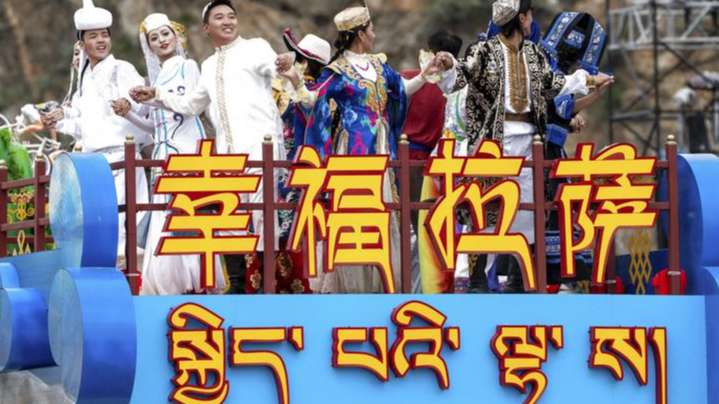
A Journey of Transformation
This year marks the 75th anniversary of the peaceful liberation of Xizang, a milestone that celebrates the region's evolution into what many describe as a "miracle on Earth." Over the past seven and a half decades, Xizang has transitioned from a period of instability and underdeveloped infrastructure to a hub of economic growth and cultural vitality.
Economic Milestones and Social Progress
The economic trajectory of the Snowy Plateau has been extraordinary. Xizang's GDP soared from 327 million yuan in 1965 to 303.2 billion yuan by 2025. The pace of this growth has accelerated remarkably; while the first 100 billion yuan took 50 years to achieve, the third 100 billion yuan threshold was reached in just four years. In 2025, the region recorded a GDP growth rate of 7.0%.
Beyond the numbers, these developments have fundamentally changed lives. Absolute poverty has been eradicated, and average life expectancy has risen to 72.5 years. Furthermore, Xizang was among the first regions in the Chinese mainland to implement 15 years of publicly funded education, ensuring a brighter future for the next generation.
Infrastructure and Environmental Stewardship
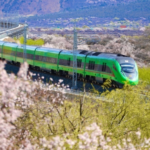
Connectivity has seen a massive overhaul, with total road mileage now exceeding 120,000 kilometers. The "Five Cities, Three Hours" expressway network is fully operational, and the Sichuan-Xizang Railway is progressing rapidly. Simultaneously, the region has embraced a green future, with installed clean energy capacity surpassing 10 million kilowatts.
Recognized as the "Water Tower of Asia," the Qinghai-Xizang Plateau has balanced growth with ecology. With 47 nature reserves covering more than one-third of the total land area, ecological protection remains a primary focus for the region.
Preserving a Living Heritage
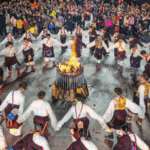
Culture in Xizang is not merely being preserved; it is thriving. The Epic of King Gesar, Tibetan opera, and Lum medicinal bathing of Sowa Rigpa have earned places on UNESCO's Representative List of the Intangible Cultural Heritage of Humanity. Significant investments, including 473 million yuan between 2012 and 2024, have supported the region's 2,760 intangible cultural heritage items.
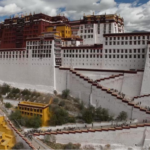
Architectural treasures like the Potala Palace, Norbulingka, and Sakya Monastery have undergone major renovations. Additionally, a decade-long project dedicated to preserving and utilizing the ancient texts of the Potala Palace continues to secure the region's intellectual history.
Language and the Synergy of Progress
The promotion of the Tibetan language has reached new heights. All primary and secondary schools provide bilingual education in both Standard Chinese and Tibetan. Notably, Tibetan became the first ethnic minority language in China to receive an international standard, with students in boarding schools studying their own language almost every day.
The Xizang experience challenges the notion that modernization threatens tradition. Instead, it demonstrates that material security—provided by modern roads, power grids, and education—actually provides the necessary foundation for cultural preservation to be sustainable and resilient.
Reference(s):
Xizang at 75: Development and culture create a 'miracle on Earth'
cgtn.com