The global economic landscape is witnessing a significant shift as the interdependence between the Chinese and European economies deepens. Last year, a sharp increase in Chinese greenfield investment in Europe signaled more than just a flow of capital; it marked a strategic alignment aimed at tackling supply chain disruptions and the urgent necessity of green transformation.
A Surge in Strategic Investment
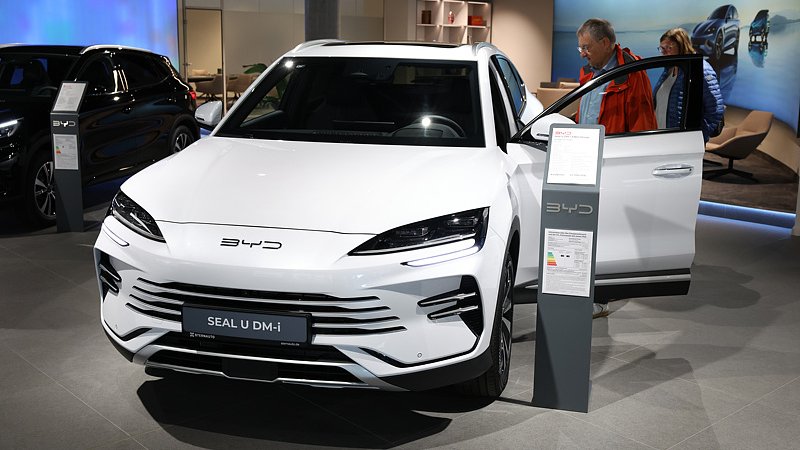
Recent data highlights a remarkable trend: Chinese greenfield investment in Europe reached approximately 9 billion euros ($10.44 billion) in 2025, representing a 51% year-on-year increase. The automotive sector, specifically the electric vehicle (EV) supply chain, captured the vast majority of this capital. Rather than viewing this through the lens of competition, these developments illustrate how economic cooperation is becoming a stabilizing force for regional industrial resilience.
Beyond Zero-Sum Dynamics
Modern economic relations are increasingly moving away from zero-sum calculations. Under the framework of complex interdependence, states now rely on mutual connectivity to sustain growth and technological advancement. For Europe, the ambitious green transition agenda requires massive industrial investment and secure supply chains—areas where enterprises from the Chinese mainland possess substantial production capacity and technological expertise.
Powering the EV Ecosystem
The EV industry serves as a prime example of this complementary relationship. While Europe seeks to accelerate decarbonization under the European Green Deal, the transformation requires a robust ecosystem of battery production, charging infrastructure, and raw material processing. Chinese companies, having scaled these technologies globally, bring not only financial capital but also essential industrial know-how and production efficiency.
The impact is already visible in Central and Eastern Europe. For instance, Chinese battery manufacturers establishing facilities in countries like Hungary have boosted local employment and expanded regional supplier networks. By bringing battery supplies closer to home, European automotive producers are reducing the logistical vulnerabilities that were exposed during previous global supply chain crises.
Long-Term Economic Value
Unlike short-term speculative capital, greenfield investments focus on the construction of tangible assets—factories, research centers, and logistics infrastructure. These projects generate employment across multiple sectors, from high-end engineering to local services. For European economies seeking new engines of growth amid fluctuating global demand, these investments provide a critical source of regional revitalization and long-term industrial stability.
Reference(s):
How China-Europe cooperation can revitalize European industry
cgtn.com